Ana Mendieta @ Tate Modern
15 Jul 2026 – 17 Jan 2027
Ana Mendieta
Dead at the age of 36.
‘Falling’ from the 34th floor of an apartment balcony.
A tempestuous relationship with minimalist trailblazer Carl Andre; did he kill her?
These facts and questions have tended to follow Ana Mendieta’s work and been central to any discussion about it. It is therefore a deliberate statement and bold choice for the latest retrospective at Tate Modern, to opt not to mention her death and the controversy surrounding it at all.
The reason? According to Valentine Umanski, the co-curator, it is because the exhibition celebrates her life and work. These were things she did. Why introduce the one element that she did not do, but was instead done to her?
A valid stance.
The work exhibited demonstrates unequivocally that Mendieta was at the forefront of contemporary art practice. Mendieta herself described herself as a Neolithic artist, her multi-disciplinary work often engaging with the natural world. Sculpting earth, carving into rock and trees, placing her own body in the landscape. Allowing water and fire to erode or destroy her works over time, Mendieta explored her relationship to the natural world. By allowing the works to be eroded and destroyed, Mendieta pushed the boundaries of what is considered art. Is it the idea, the concept? the original work, now no longer in existence ? Or the photographic record of the piece?
Mendieta, although working within the landscape did not consider herself a Land Art artist. Land Art was part of the wider conceptual art movement and artists such as Robert Smithson, Michael Heizer and Walter de Maria produced large site specific and site responsive works. Their work often involved substantial changes to the land they responded to. Mendietta’s work however often involved minimal disturbance to the natural world and it’s eventual decay and reclaiming by the natural world formed part of the work.
The exhibition, arranged thematically rather than chronologically emphasised how although her choice of artistic medium changed and expanded over time, engagement with concepts of identity, the natural world, and geopolitics remained a constant.
Below are some of the key works exhibited.
‘Guacar [Our Menstruation (Rupestrian Sculptures)] (1981)
![Guacar [Our Menstruation (Rupestrian Sculptures)] (1981)](https://ricardopimentel.co.uk/application/files/1817/8593/5114/ana-mendieta-1.jpg)
An anti-monument, Guacar, part of her Rupestrian sculptures series, is carved into the limestone rock of the cave Cueva del Águila in Cuba. Engaging with the indigenous people and culture of the Carribean, Taíno, Guacar references both female divinity and ancestry and therefore reads as both a recovery of indigenous memory and a meditation on menstruation and fertility. The work itself turns the cave into a womb-like site of origin, a ritual reconnection with the land. The works in this series are important as they combine contemporary art practices with pre-colonial traditions. An invocation of history, ritual and black consciousness, highlighting the complexities of present day realities.
‘Imágen de Yágul ’ (1973)
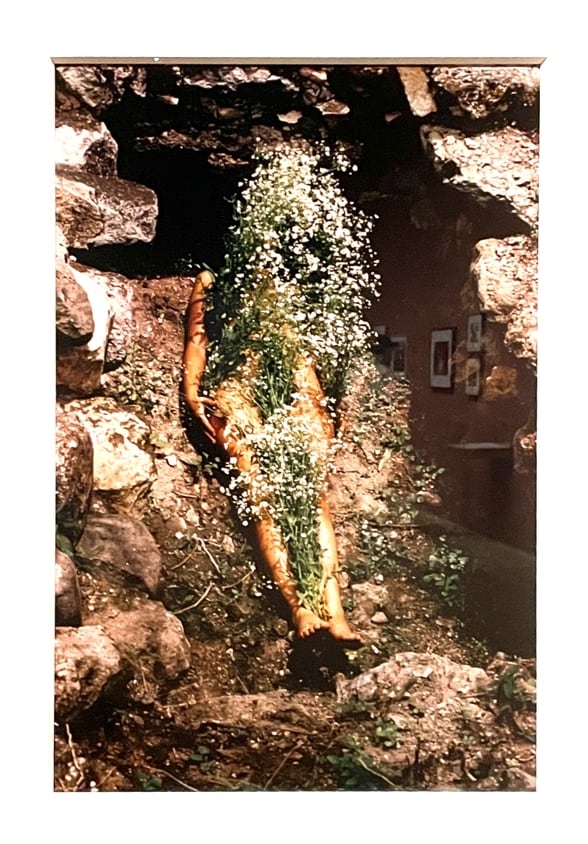
A key work, as Imágen de Yágul is the first of what became known as her Silueta Series. In this series, Mendieta places her physical body, or its impression or outline in the earth. With Imágen de Yágul specifically, Mendieta visited the ruins of Yágul, an archaeological site with a proliferation of graves. Ruins and graves, all overgrown with vegetation. Lying down in one of the open tombs, Mendieta had her body covered in white flowers, the image thereby created of a body immersed in history and reclaimed by nature.
‘Alma, Silueta en Fuego’ (1975) and ‘Blood and Feathers’ (1974)
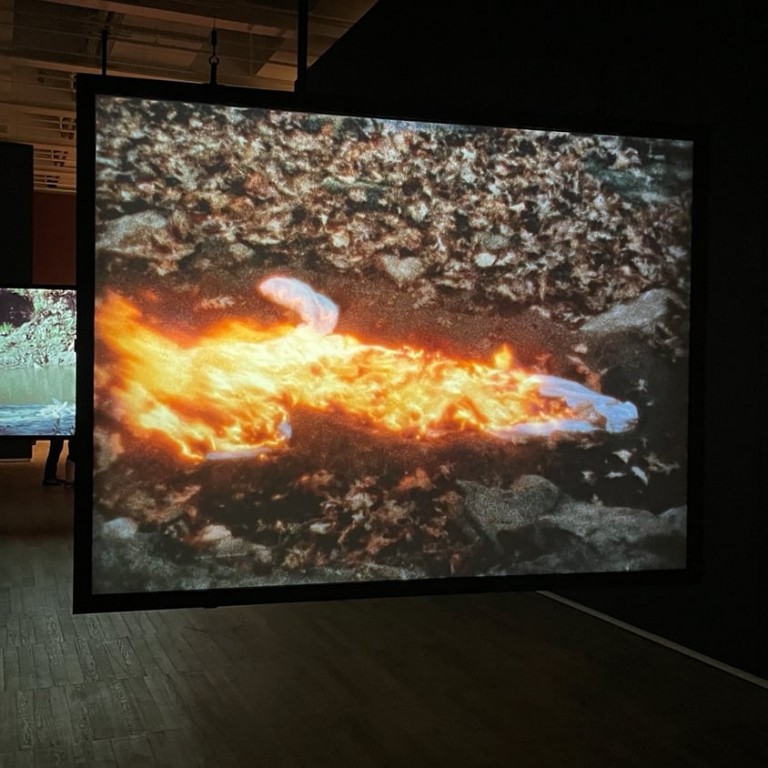
Alma, Silueta en Fuego (1975)
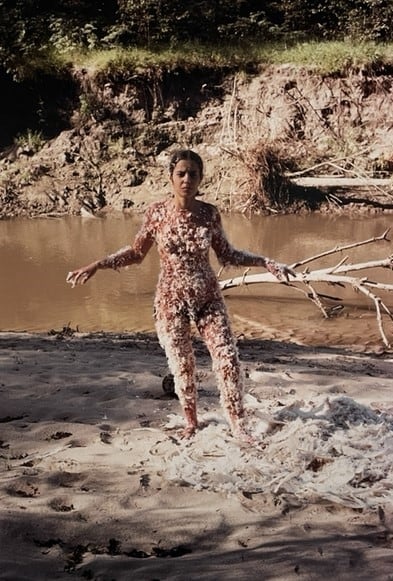
Blood and Feathers (1974)
Mendieta was a multi-disciplinary artist and central to her practice were her Super 8mm films. Serving both as documentation and performance, many of these continued to show her exploration of transformation, erasure and spiritual rebirth. In Alma, Silueta en Fuego Mendieta allows an imprint of her body in the earth to be consumed by fire. A disappearance and renewal.
In Blood and Feathers Mendieta’s body is staged as a site of sacrifice. Initially covered in blood, a medium of purification and sacrifice, Mendieta then covers herself in feathers. The feathers acting as the vessel for passage into otherworldniness.
‘Untitled (Facial Hair Transplants)’ (1972)
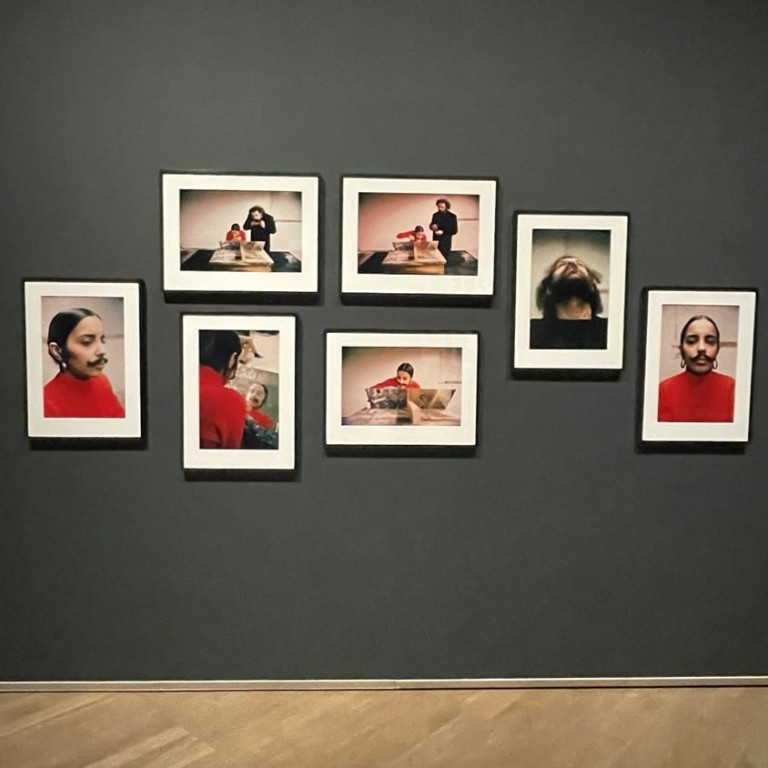
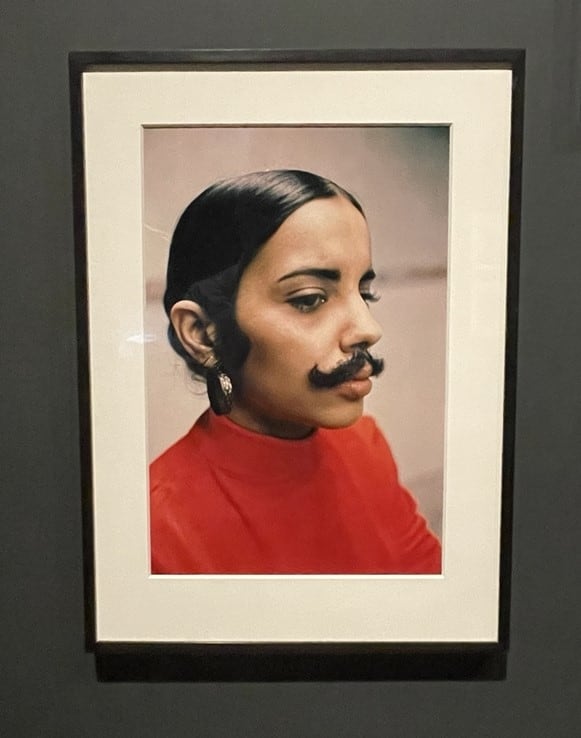
On the surface playful, but this series of photographs show how Mendieta’s work was way ahead of its time. The act was simply to have a fellow artist cut off parts of his beard and for Mendieta to stick it to her face as either a moustache or a beard. The strength associated with the growing of hair can be traced back even to biblical times with the story of Samson and therefore Mendieta here can be said to be acquiring strength through the performative act of sticking some on.
However, hair and particularly hair on women is politically charged. With these photographs Mendieta refuses to yield or conform to patriarchal societal norms surrounding beauty and femininity and therefore as a woman wearing facial hair Mendieta manages to collapse the border between masculinity and femininity and exposes gender as something that is staged.
Less successful however is the installation Old Westbury (1978). Mendieta rather than working solely in nature, continued to explore the same themes of belonging, identity and our relationship with nature by bringing the outside world into the gallery or museum space. Of course it can be argued that Mendieta’s work still explored her usual themes however it can also be argued that bringing nature to the viewing public increases visibility. Why trek to remote caves in Cuba when you can experience her work in the setting of a downtown Manhattan gallery?
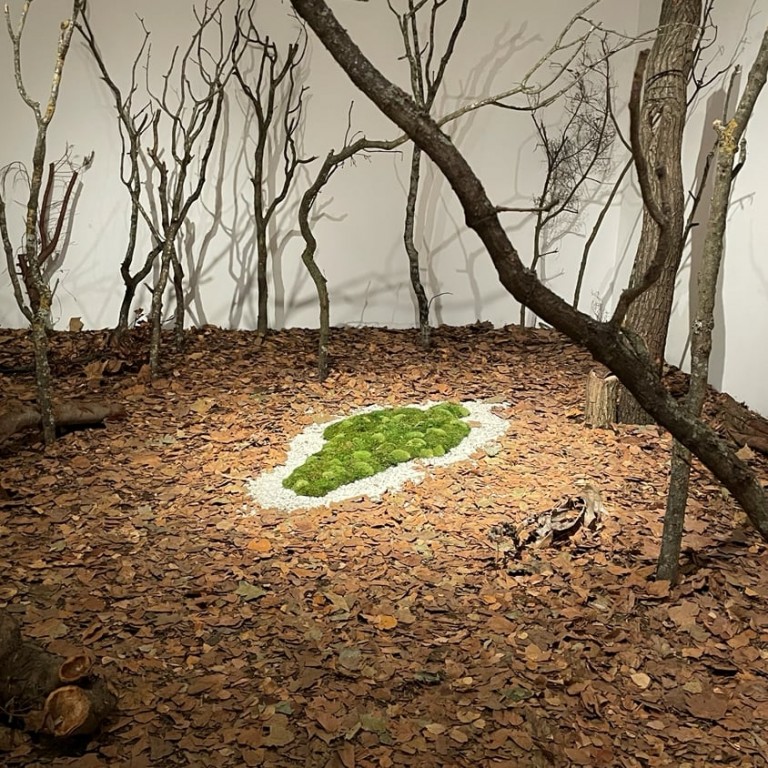
Old Westbury (1978), (Recreation 2026)
Tate Modern took this further by recreating the original installation Old Westbury and transposing it to an English/London setting where natural materials such as native oak branches replace the original wooden branches sourced locally in New York. Although this would have been in keeping with Mendieta’s original aims the installation presented felt like yet another step removed from the natural world and the original.
Old Westbury aside, despite being produced over 40 years ago, Mendieta’s work is current and speaks of the here and now. Its themes arguably more relevant now than even then. An absolutely correct decision by the Tate to focus solely on the remarkable work of this trailblazing artist.