Donald Locke @ Camden Arts Centre
10 Apr 2026 – 30 Aug 2026
Resistant Forms
Donald Locke is not a household name in the UK, in fact I doubt he is a household name anywhere.
One of his works, Plantation Piece (1973), I first came across by chance. It was one of many in the ‘Black Atlantic: Power, People, Resistance’ at the Fitzwilliam Museum, Cambridge held in late 2023. That exhibition was billed as highlighting the wealth accrued, both financially and materially, by our cultural institutions during the Trans-Atlantic slave trade, but also I suspect held in an attempt to assuage its growing discomfort and sense of guilt. The exhibition drew on the institutional riches and presented them in dialogue alongside the works of contemporary black artists.
What made Plantation Piece stand out was Locke’s ability to use the Western artistic practice of the avant-garde to undermine the dominant colonial narrative of the time.
Resistant Forms is the first major survey of Locke’s artistic work to be held in Europe and it didn’t disappoint.
Although born in pre-independence Guyana, Locke’s artistic development and exposure was in the UK and US and therefore as a result he considers his the work of a member of the Guyanese diaspora, influenced therefore by both worlds. The result of this are works, which whilst dealing with the cultural complexities and tensions of the diasporic community, draw on Western artistic traditions whilst simultaneously subverting them. Sculptural works, ceramic pieces and in particular his works on canvas, combine, what to Western eyes, are unorthodox material components to create a distinctly anti-colonial narrative. It is this combination of subject matter and unconventional aesthetic that elevates Locke’s work above the merely intriguing.
Below are examples of Locke’s wide ranging artistic practice on show.
‘Plantation Piece’ (1973)
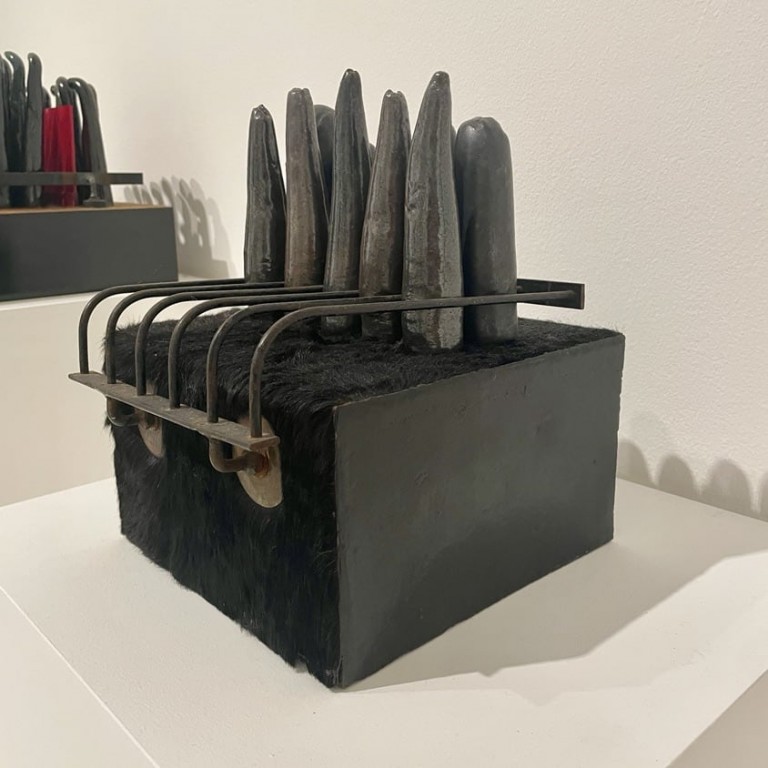
The piece that first drew my eye to Locke’s work.
Born on a strip of land wedged between two sugarcane plantations, Locke grew up in a system in which ‘it dominated the sky, it dominated your life from beginning to end’. Bullet like forms, possibly reminiscent of sugar canes or phalluses, tightly arranged within a restrictive grid. Speaking both of restraint and forced loss of identity imposed by the plantation system. The human turned prisoner slave both entrapped and subjugated.
Locke produced a number of similar works in the plantation series, yet when they were first exhibited in London, they were described in terms of their aesthetic rather than in terms of their historical and political significance. This was an important observation, for Locke argued that although slavery had been abolished, the plantation system was still very much in evidence as was the legacy of the slave trade, something which vested interests were keen not to have in the public arena.
‘Pomona Blue’ (1985-86)
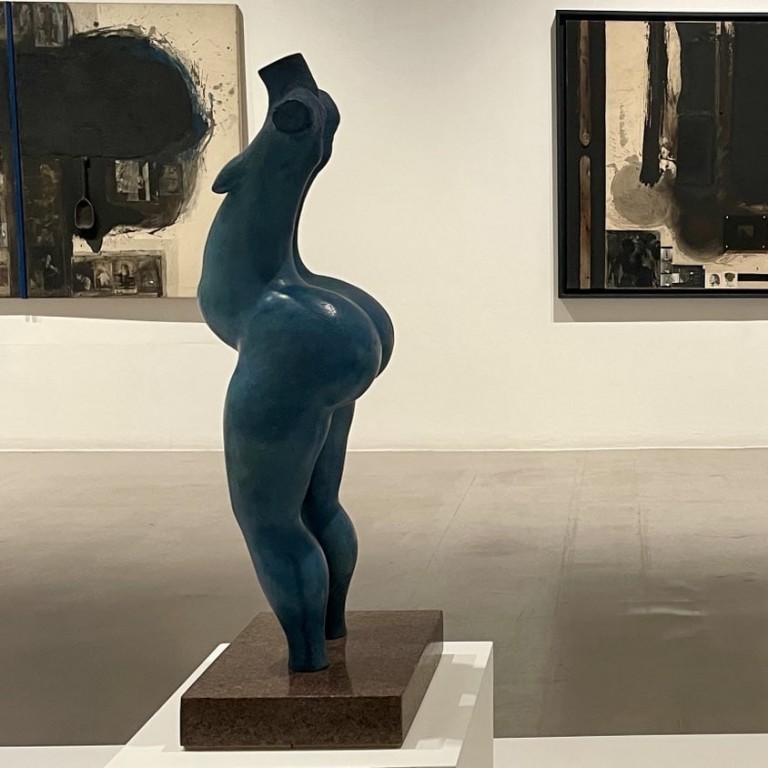
Pomona, the Roman goddess of fruitful abundance is a recurring subject across many of Locke’s works, not only sculpturally as here, but also appearing as images within his large scale canvas works. By giving this figure its classical name yet also the buttocks of the Hottentot (Black Venus), Locke manages to both subvert the form of classical perfection and elevate the Hottentot curves.
Note: The Hottentot (Black Venus) was a South African woman called Sarah Baartman, exploited as a freakshow exhibit throughout Europe in the 1800s. Her life was depicted in an excellent but ultimately tragic film in 2010 directed by Abdellatif Kechiche.
‘Dynasty, The Birthplace of Empire ’ (1989)
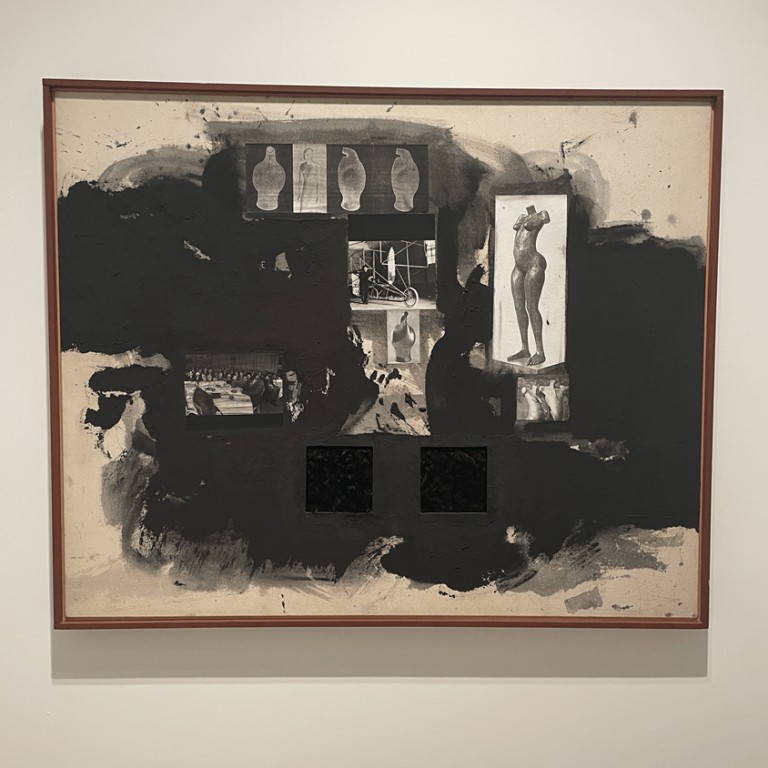
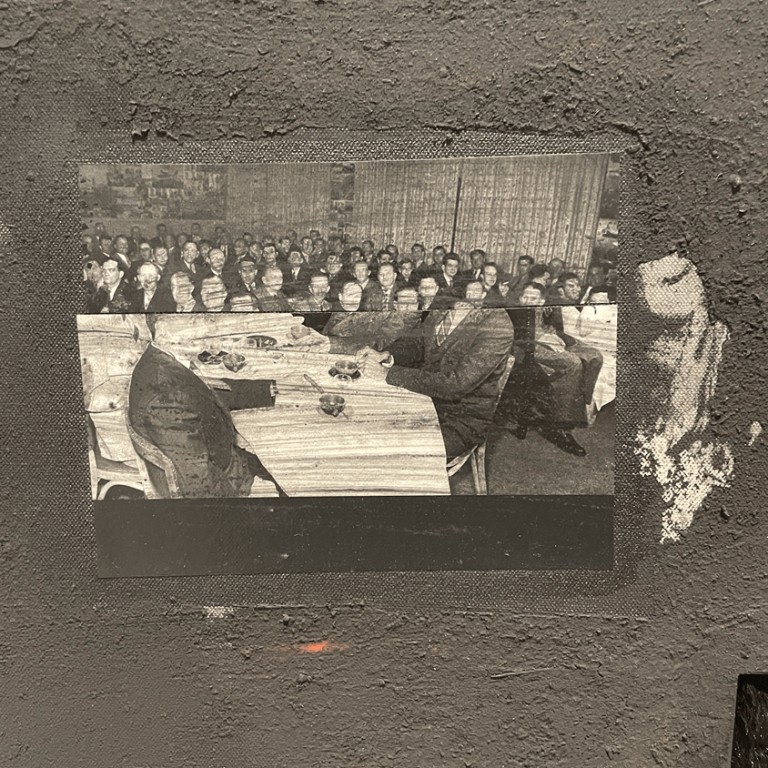
Detail
Detail
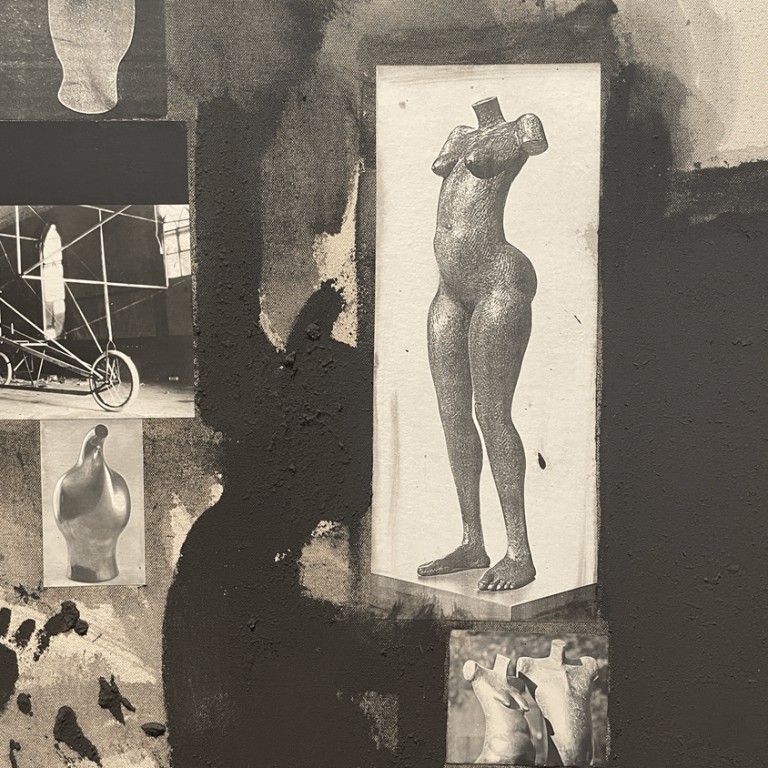
Dynasty, The Birthplace of Empire is one of a series of paintings/canvasses Locke produced whilst living and working in Atlanta and form what in my view are the most striking works in the exhibition.
Understanding their nexus, one has to look at Locke’s life at the time. Having just moved to Atlanta, Locke found himself within a city in transformation and also in an artistic community that was forcibly questioning the question of black heritage, roots and identity. It was here that Locke, having been trained in the European academic and artistic tradition, decided to make a break from what he called an ‘alien inheritance’. This involved exploring his Guyanese heritage, whilst also making connections with the American South and wider Global South.
There are the titles of the works themselves, ‘Dynasty, The Birthplace of Empire’, ‘An American Caste’, ‘High Noon on the Demerara’ (a reference to the Demerara river in Guyana, pivotal to the sugar plantations, transport of slaves and creation of wealth), ‘The Cage’, ‘Celebration of 24th May’ (A reference to the Berbice slave uprising in 1763 against colonial rule. It was one of the first major revolts in the Caribbean), ‘Imperial Echoes’ and ‘The Triumph of Apollo Vector’ to name a few, each exploring the connections between historical events and places with the present and how that helps shape cultural identity.
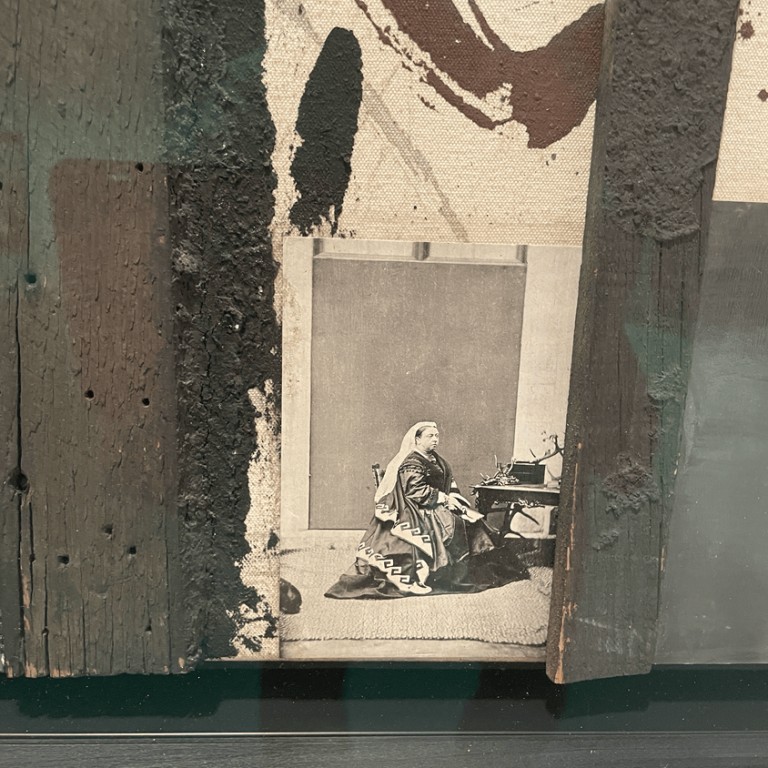
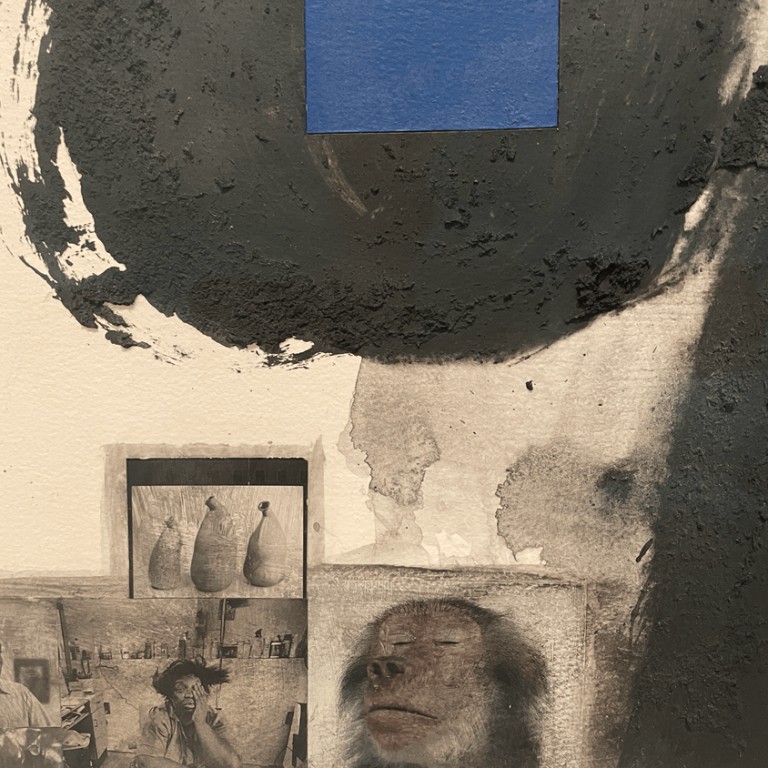
The aesthetic of the works has echoes of Robert Rauschenberg’s combines and reflect the multiplicity of references and strands. The overlapping histories, the personal archive, the cultural analysis coupled with Locke’s artistic experimentation and vision. A collision of worlds, artistically, geographically and politically, manifested in paint, artefacts and photographs laid out on a canvas, as shown in the further pictures below.
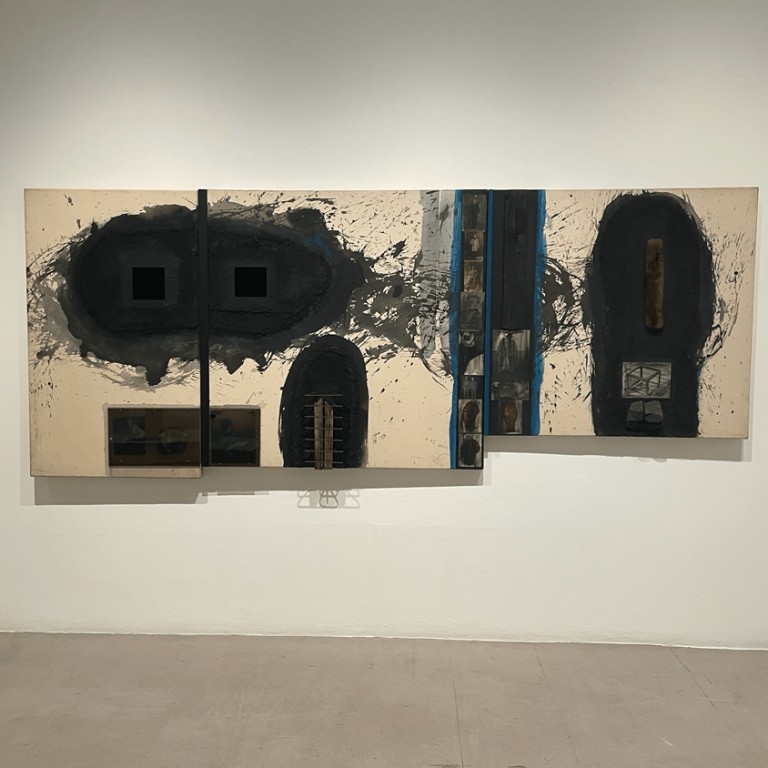
Five Analogues of Apollo Vector (1992)
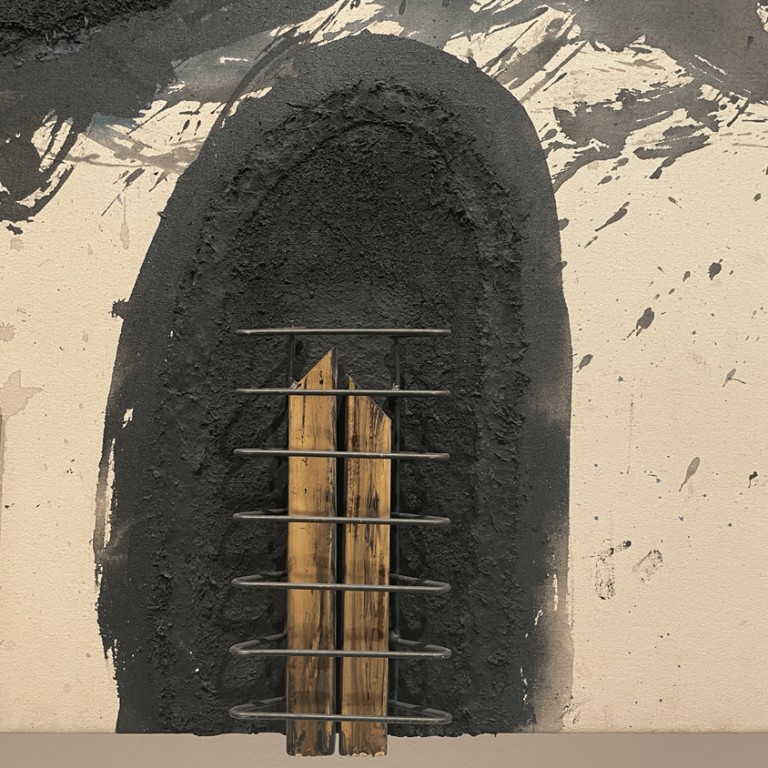
Detail
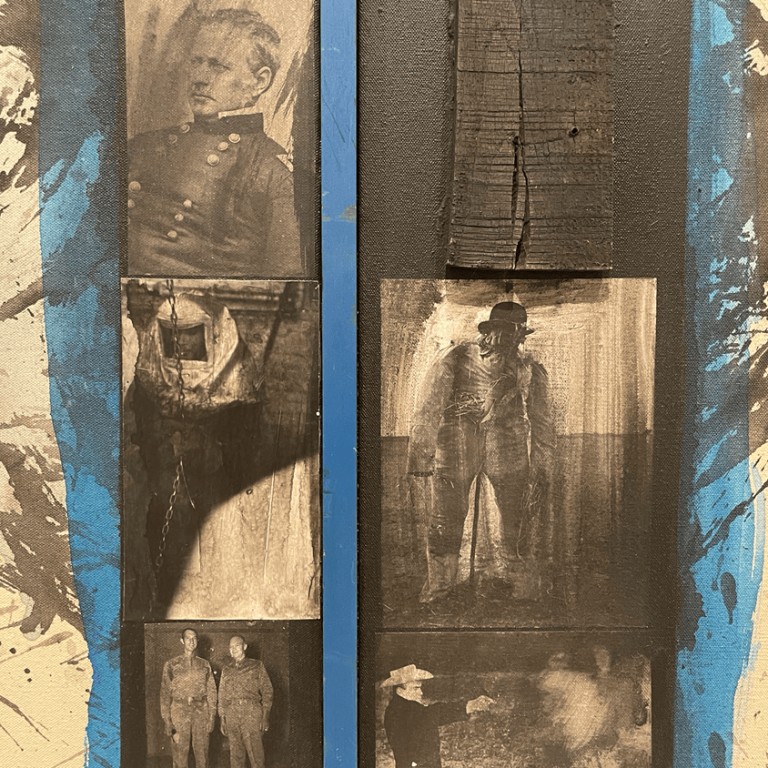
Detail
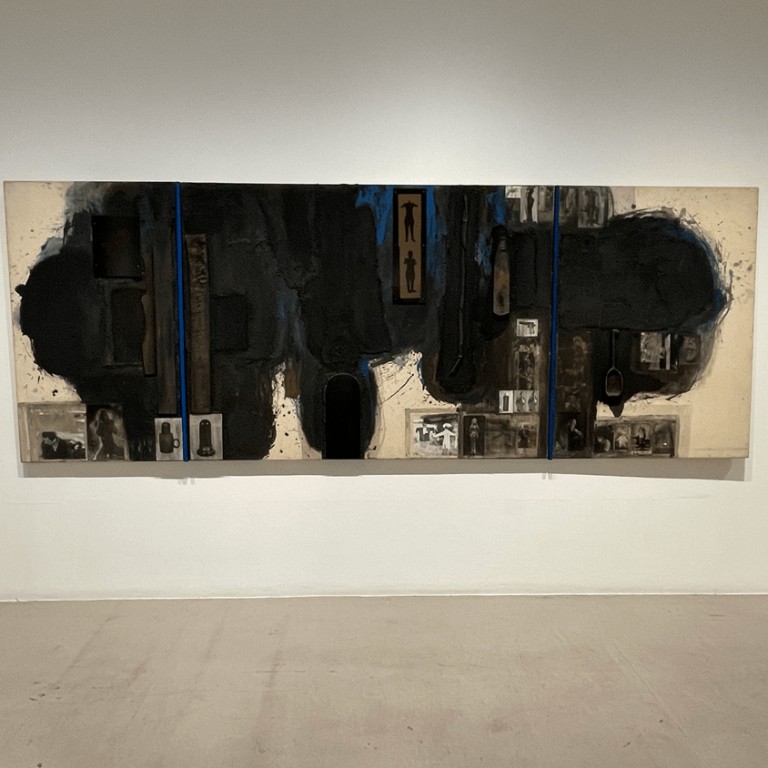
The Triumph of Apollo Vector (1993)
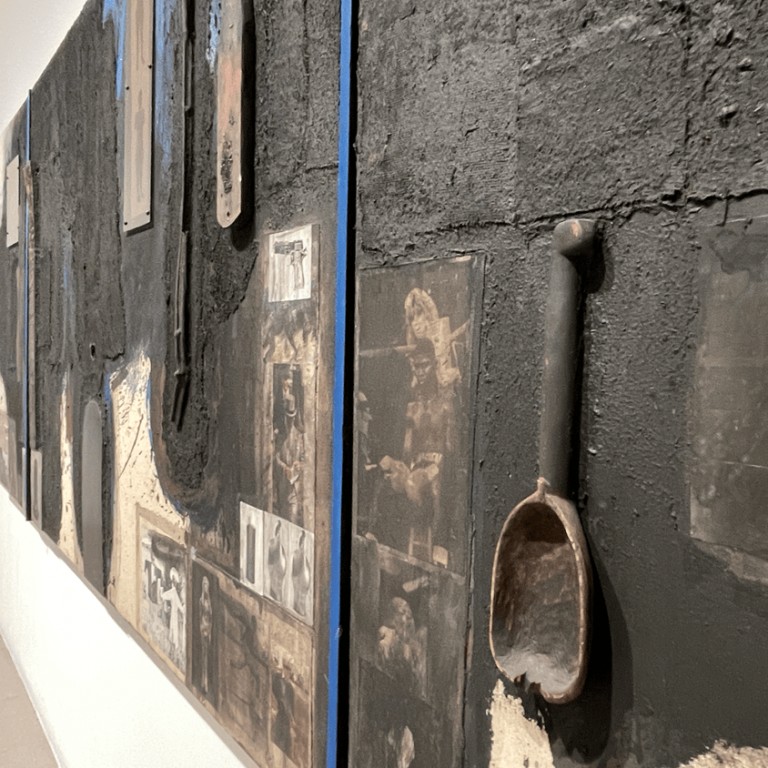
Detail
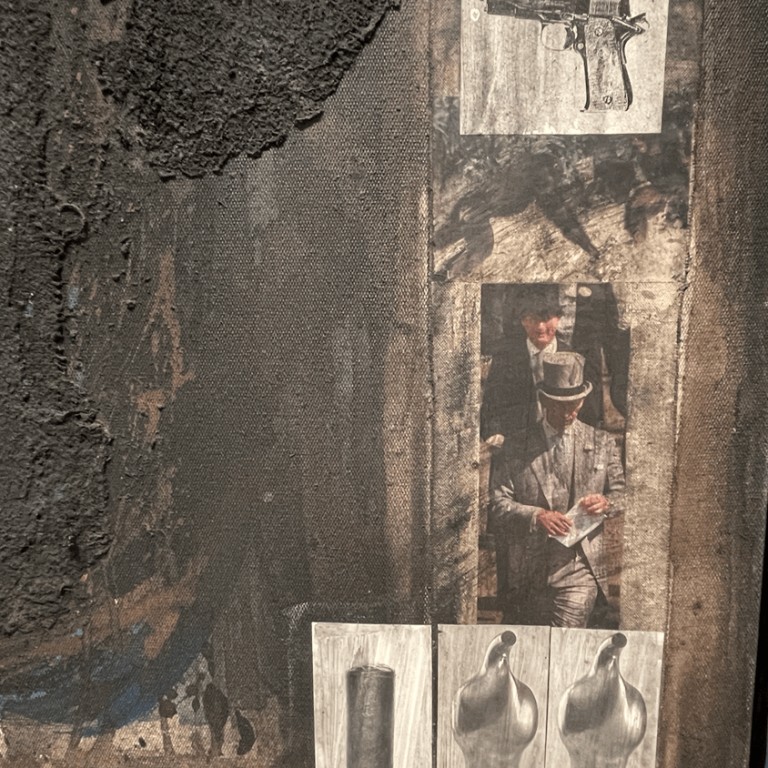
Detail
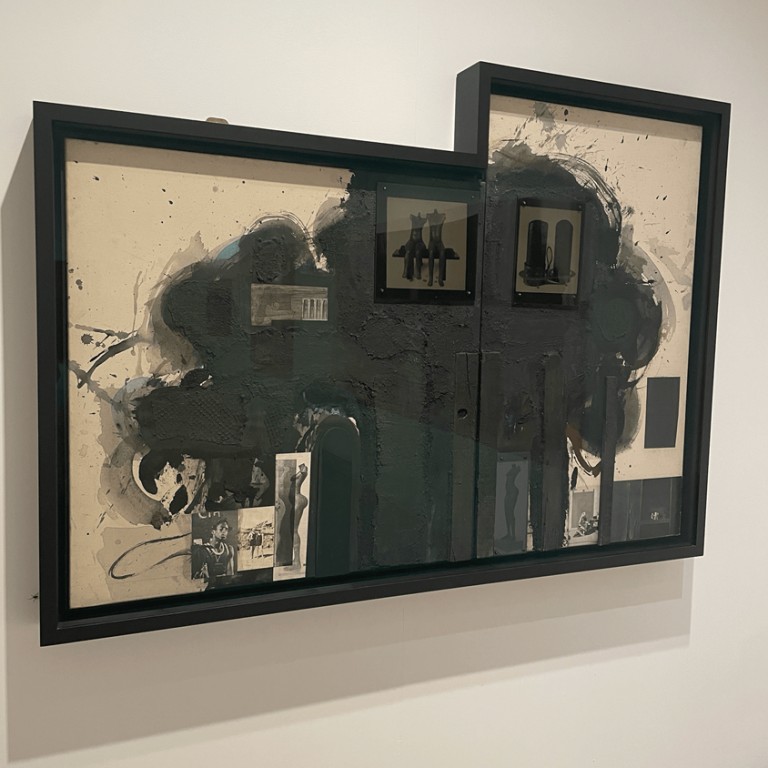
Imperial Echoes (1991)
Detail
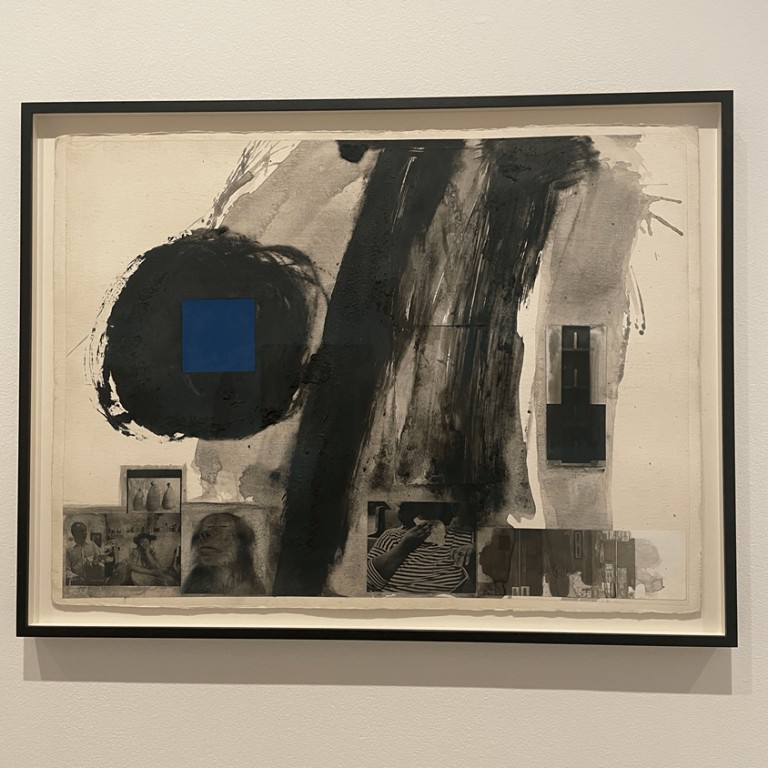
Parade #5 (1993)
Detail
Locke’s progression from artist restricted by Western classical convention to artist exploring history, identity and materiality is most clearly seen in his ceramic works.
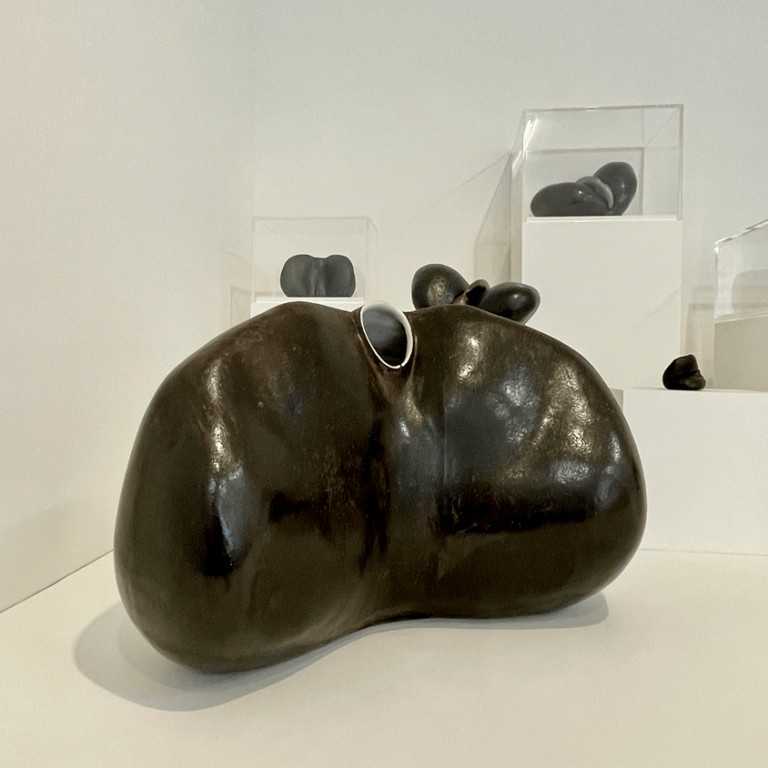
Twin Form (black with white interior) (1969)
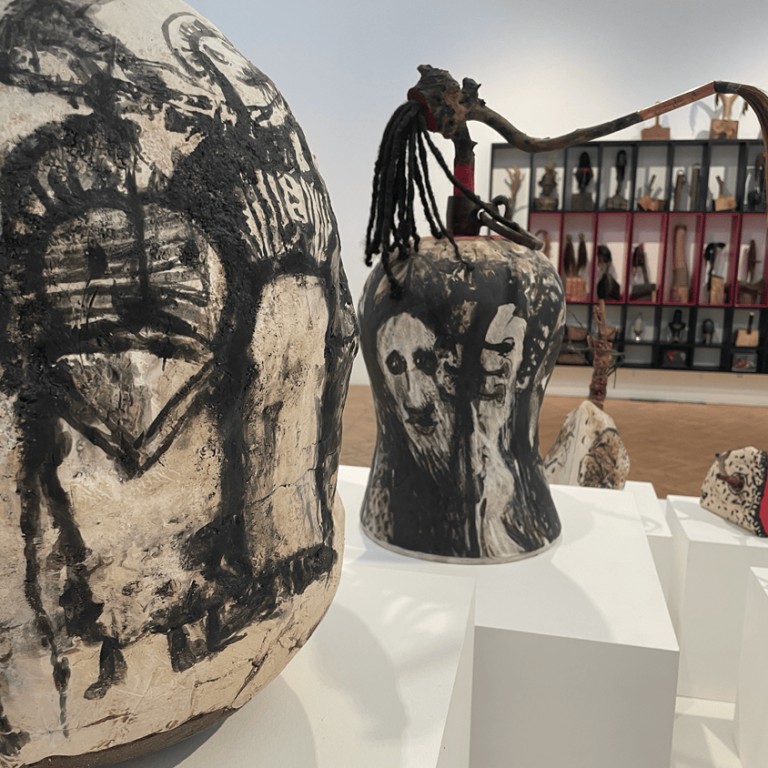
From the series, The Legacy of Hernando Cortez (2008 – 2010)
Twin Form (black with white interior), beautifully crafted, was an exploration of functionality and form, in which Locke posed the question, what purpose does a vessel possess if it no longer functions as a vessel? In this series of ceramics, the vessels have either twisted necks or as in this case no neck, making them functionally redundant. In his later ceramic works Locke explores the historical roots of mark making in Guyana and also its colonial past. Hernando Cortez (Hernán Cortés) was part of the Spanish generation of explorers and conquistadors who changed the face of South America.
What the exhibition did so well was present a substantial body of work which clearly demonstrated the evolution of Locke’s artistic practice. An artist who was clearly influenced by classical Western artistic traditions and form, but who also managed to break free from it and develop his own language. A language influenced by the many intersections of race, history and identity across time and geography.