Nan Goldin @ Gagosian (Davies Street, London)
13 Jan 2026 – 21 Mar 2026
The Ballad of Sexual Dependency
Nan Goldin’s photobook ‘The Ballad of Sexual Dependency’ dropped into an unsuspecting world in 1985. One hundred and twenty six photographs, both a visceral narrative and a visual diary, that capture the rawness of intimacy, emotional pain and the complexities of human relationships.
Through her lens, Goldin challenged traditional views of society, directing the ‘gaze’ into areas such as domestic violence, addiction, sexuality and loss. It is important to remember that, at the time, AIDS was carving its way through a whole community and the pain of loss was compounded by Government and religious hostility.
Goldin lived her life on the margins of ‘conventional’ society and as such these photographs were her invitation to the public to view it. Initially the public, consisted of her circle of friends – her chosen family, but as the viewing public increased in size, their role took on one of engendering empathy.
The photobook still has the power to both shock and inform.
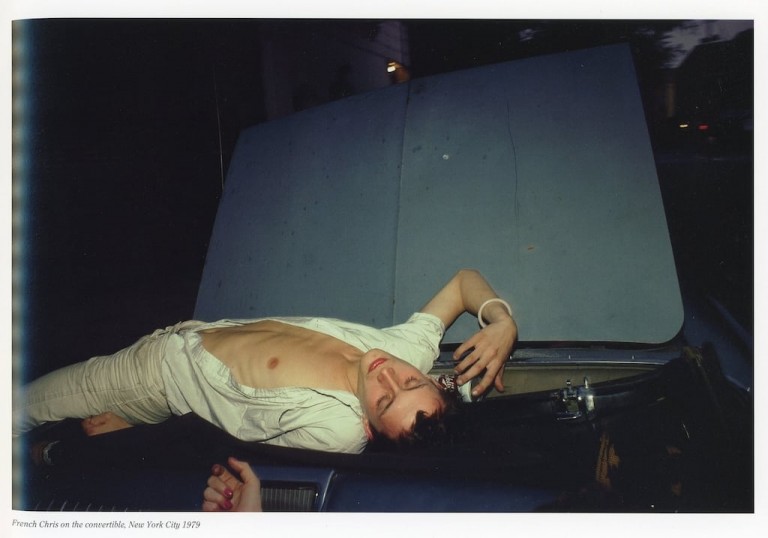
Although the photobook needs to be viewed in its entirety, below are some of Goldin’s photographs. As photography wasn’t allowed in the exhibition (annoying, especially in a photography exhibition!) the images below are scanned from the photobook.
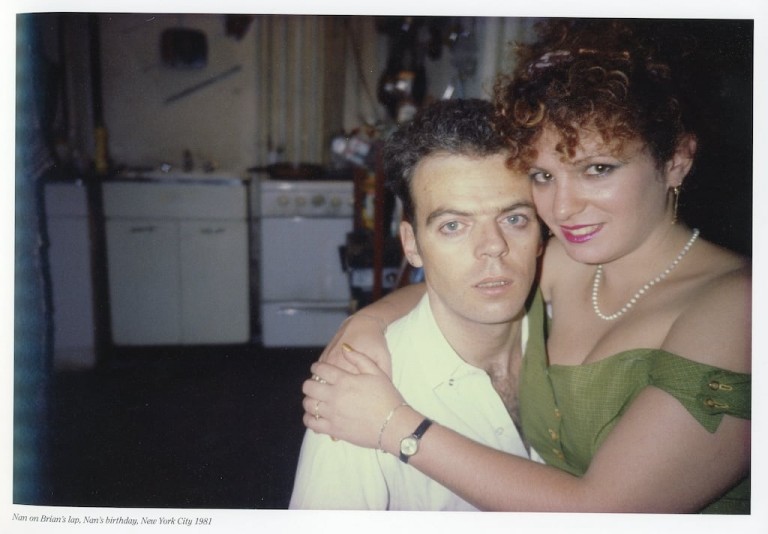
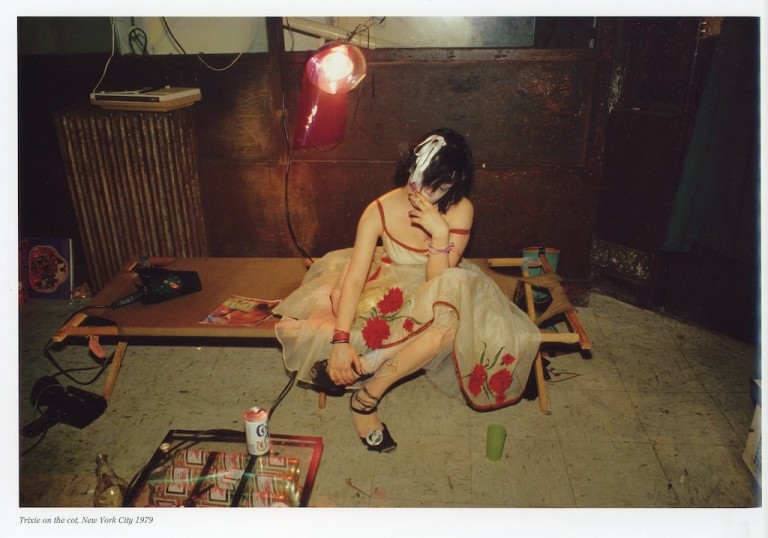
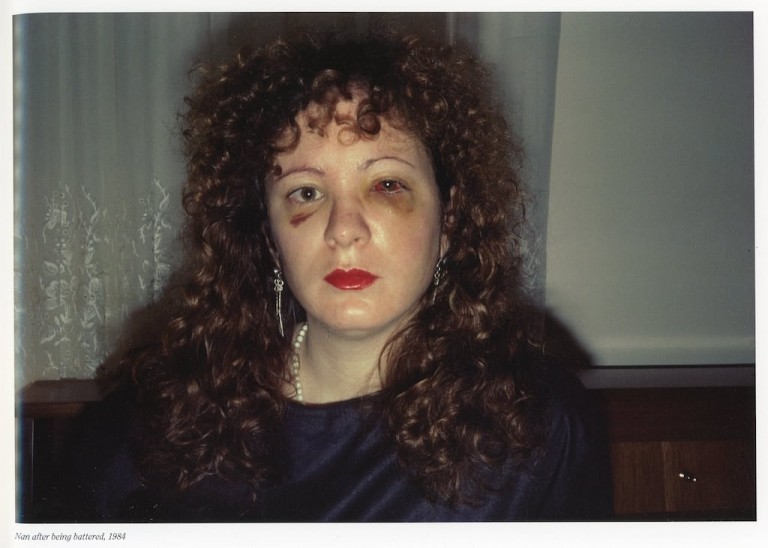
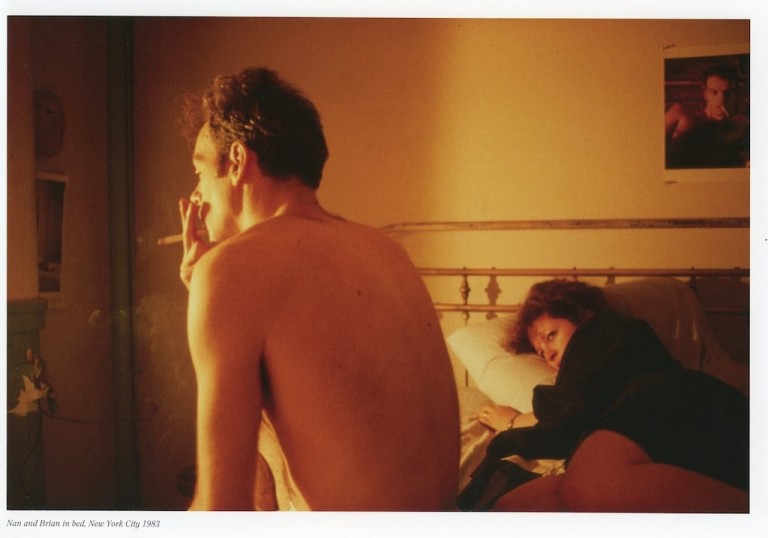
The Gagosian exhibition does though have a significant flaw. Not in the work itself, obviously, but in the format the gallery chose to display it in. This is where art and those institutons that exhibit it collide. On the one hand the exhibition is, as described, of the images that were published in the photobook, however earlier incarnations of the images were projected as slides, one at a time, in small venues accompanied by music. Presenting all the photographs simultaneously on a wall makes it more difficult for the viewer to concentrate on the individual image; we are overwhelmed by the sheer number of the photographs and their proximinty to each other. I look at one, but my peripheral vision is registering others. Being forced to view each one, one at a time would have been a more powerful and moving experience.
The White Cube aesthetic of the gallery is also too clinical; it clashes with the subject matter. I want to be forced to view it in the world from which it was born, I don’t want that world to be beautifully framed, hung so perfectly and sanitised in order to become palatable in mine.