To Improvise a Mountain @ MK Gallery, Milton Keynes
25 Oct 2025 – 25 Jan 2026
MK Gallery is one of those cultural gems, sitting outside of London, which manages to constantly surprise with unexpected and thought provoking exhibitions. In this latest exhibition, the artist Lynette Yiadom-Boakye curates ‘To Improvise a Mountain’, bringing together the work of several artists who have influenced her practice. Although a figurative artist, her influences range from photography, film, sculpture, drawings, paintings and text. What they have in common is an engagement with themes of activism, identity, beauty and intimacy and this is evident in Lynette Yiadom-Boakye’s own work. Some are subtle in their approach, others direct and this raises the eternal question, which are more effective in affecting the change they seek?
Below is a selection of the works exhibited.
Zoe Leonard – ‘I Want a President’ (1992)
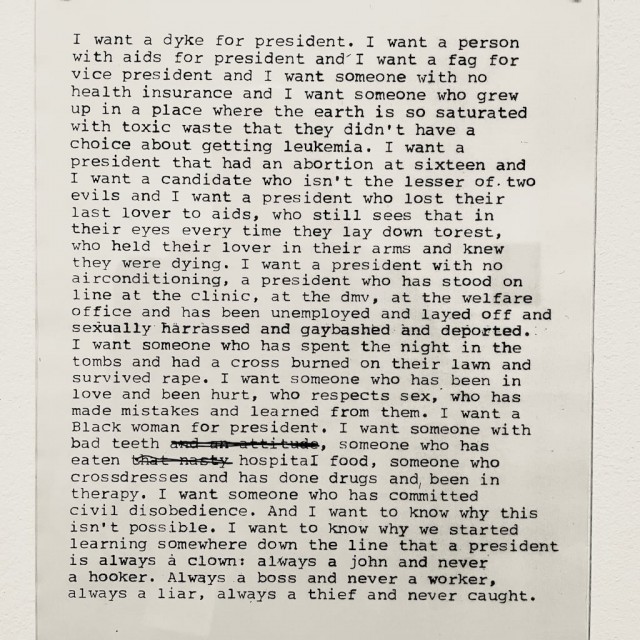
Leonard’s devastating call to arms. One would argue even more pertinent today than it was in 1992. Working in the intersection between activism and art, in this essay, Leonard lays bare the paucity of choice presented to voters “always a boss and never a worker, always a liar, always a thief”. The dream is presented unflinchingly for future generations to reference.
Zoe Leonard – ‘Untitled’ (2020/2022)
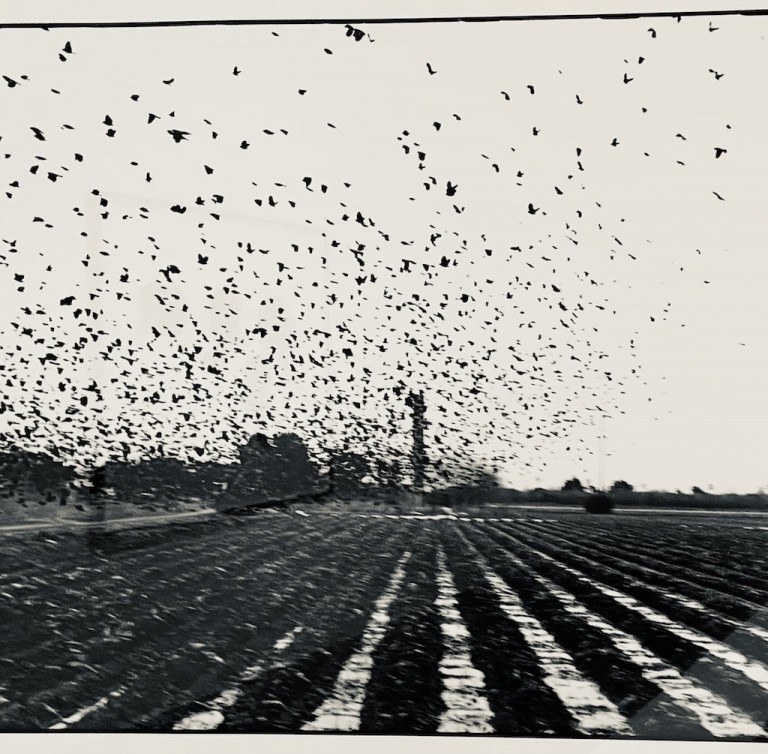
A subtle reflection on the theme of migration. A photograph of migrating birds taken by the Rio Grande, a river which demarcates the border between the USA and Mexico and an area used as a crossing point into the USA. The free flight of the birds contrasting with the harsh reality of human migration on the ground.
Again, more pertinent now than even five years ago.
David Wojnarowicz – ‘Untitled (Face in Dirt)’ (1991)
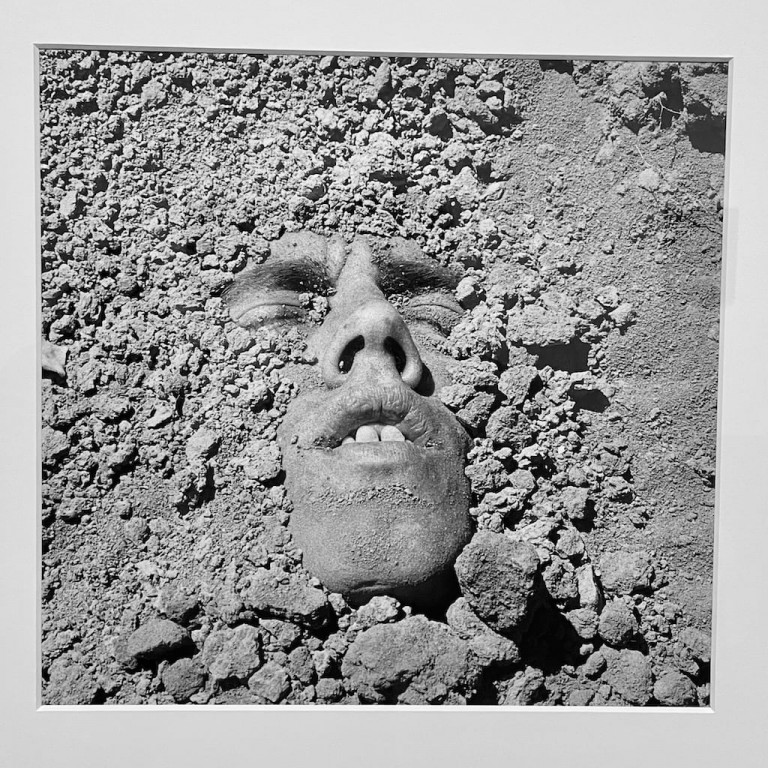
An unsettling image highlighting unsettling times. The societal backdrop was the AIDS crisis engulfing gay communities in the US. Wojnarowicz, who later died of AIDS himself, was an activist highlighting government indifference and hostility towards the gay community. The image serves, not only as a reminder of the thousands that were buried, but also acts as a metaphor for the contrast between visibility and invisibility of a marginalised community and the ensuing dehumanisation suffered.
Lynette Yiadom-Boakye – ‘Sunbird 2’ (2025) and
Walter Sickert – ‘The Blackbird of Paradise’ (1896)
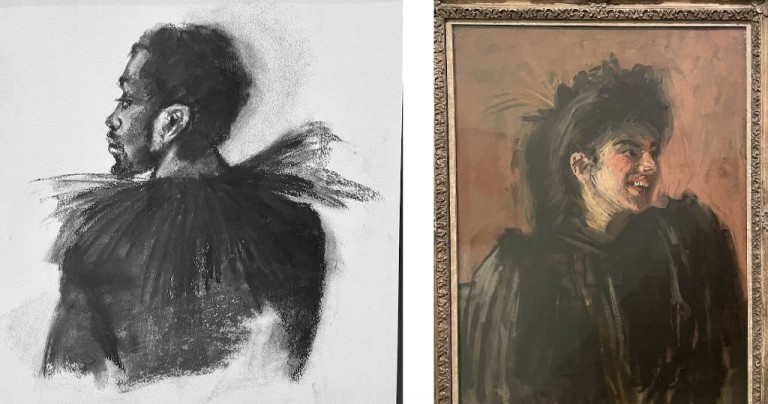
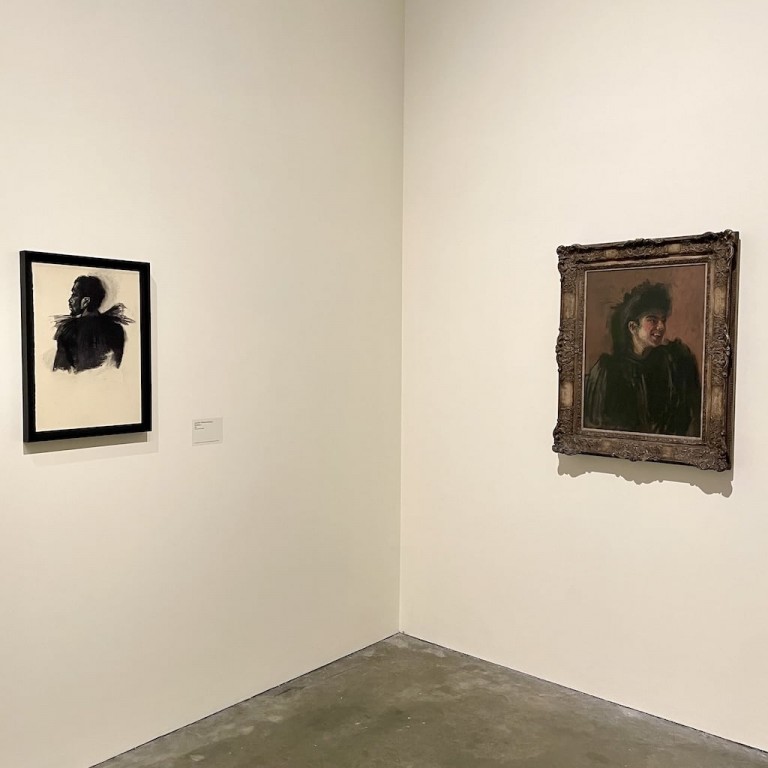
Curating the exhibition allowed Lynette Yiadom-Boakye to place her influences centre stage. Here, a dialogue separated by 130 years.
Walter Sickert’s The Blackbird of Paradise captures the life of a music hall performer. A life in which the exuberance and liveliness of the performances contrasted with the isolation and loneliness off stage.
Yiadom-Boakye’s Sunbird 2, captures a solitary dancer deep in reflection. The similarities of subject matter aside, the use of light and shadows in her work, clearly visible too in Sickert’s painting.
Toyin Ojih Odutola – ‘Happy Valentine’s Day’ (2023)
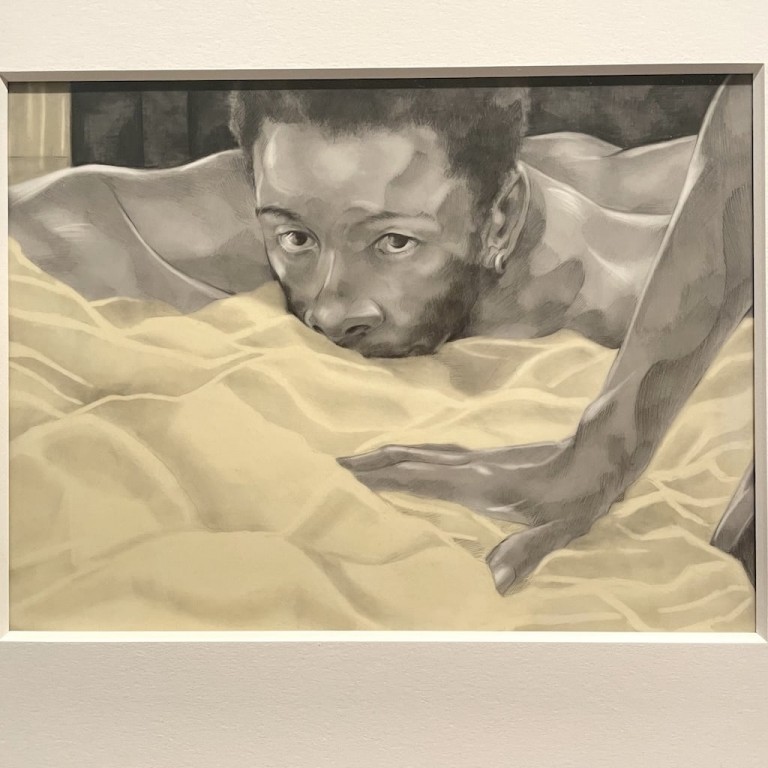
Ojih Odutola describes his practice as “concerned with presenting something that might be, as opposed to something that already is”. With Happy Valentine’s Day, the title creates a jarring contrast with the subject’s expression. The look is not one of happiness, perhaps is even one of fear. There is a power dynamic at play and the principal figure does not possess the upper hand.
A closer look suggests that the hidden person is in the process of leaving, but the reason unclear, allowing the viewer to construct their own interpretation of what “might be”.
Lisa Brice – ‘Untitled (After Vallotton)’ (2021) and
Félix Vallotton – ‘La Blanche et la Noire’ (1913)
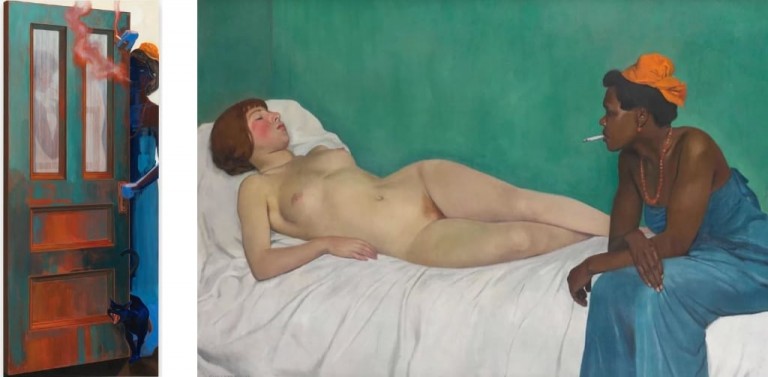
Lisa Brice’s practice predominantly focusses on the lives of women and the expectations of women imposed by societal norms. Her method is to reinterpret classical paintings and depictions of women, presenting them in a form which gives them agency and in which the power dynamic has shifted. In Vallotton’s painting (itself inspired by Manet’s Olympia) although the black woman is relaxed it is likely her role is that of a servant. In Brice’s version, the black woman is the principal figure and seen emerging from behind a door, whilst the white woman is portrayed merely as a shadow seen through glass. The inclusion of the emerging black cat though, is key to how the black woman is meant to be perceived by the viewer. Cats are often regarded as symbols of independence, femininity and self-assuredness.
Lynette Yiadom-Boakye managed to successfully bring together an eclectic group of artists, each with different voices yet all concerned with overlapping activist themes of identity, gender and race.