Masters Project - Trimesters 5 & 6
The challenge of other possibilities
The danger of being satisfied with working within the comforts of the familiar; therein lies mediocrity.
1
3
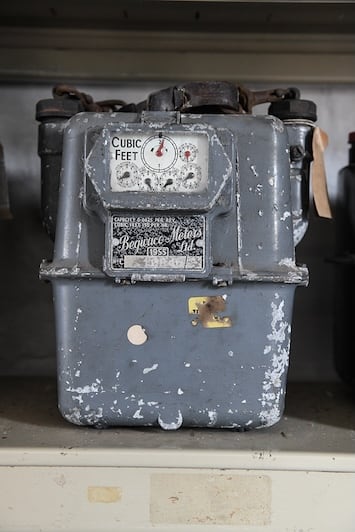
The print is homage to Bern and Hilla Becher’s photographs of gas towers, which Idris Khan superimposed to form one composite image.
4
Stone Lithograph printed on Snowden smooth 270gsm paper. There is a richness of tone compared with prints on newsprint. I also decided to emphasise the edge of the stone in a different colour. The stone’s edge is usually not printed in stone lithography, however by emphasising its presence it reinforces the presence of the hand of the artist.
5
6
7
A1 sheet of paper with pva glue and crushed coal. The coal dust here has given the piece a shimmer. The larger pieces of crushed coal drop off giving the work a semi-temporal state.
Experimenting with different types of coverage. Either using water-based spray, resin mixed with yellow pigment, dipping coal or painting with nail varnish. None of the methods were suitable either due to poor coverage, long drying times or expense.
8
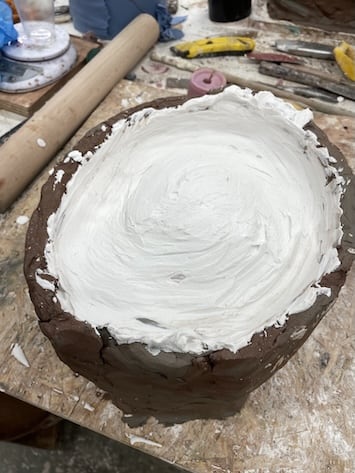
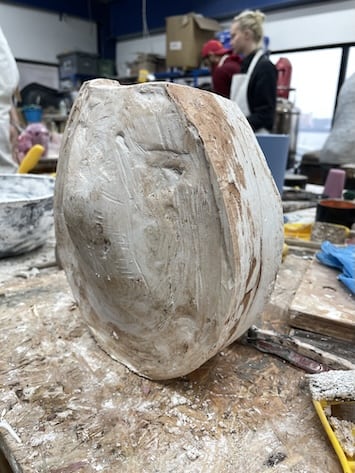
Casting objects will have potential for this project. Actual historical objects will be difficult to use. Alluding to their presence or absence can I think be achieved through casting objects. Once again though making a double cast is a lengthy process therefore single-cast options may have to be used.
9
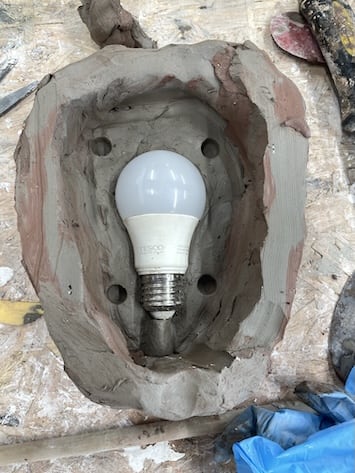
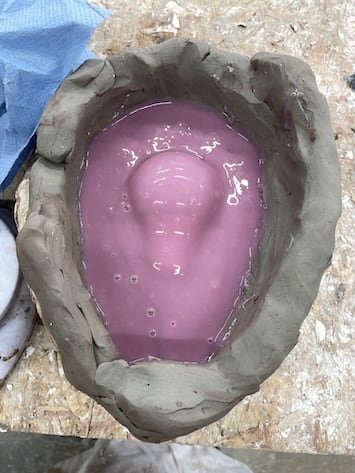
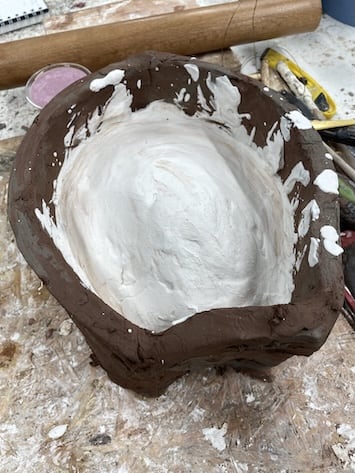
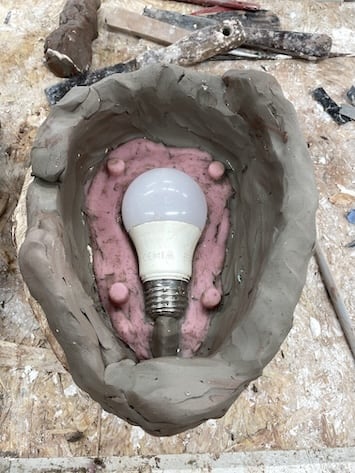
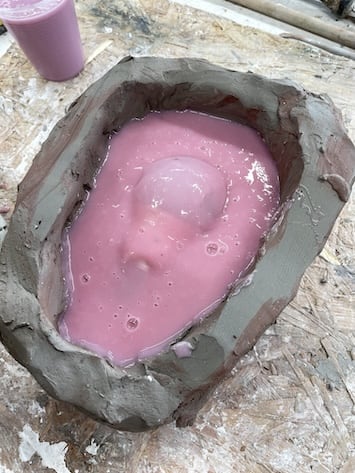
Place lumps of coal in plastic cups remembering to include a dowel. This will act as a pouring hole for the resin.
Then fill the cups with silicone and allow it to harden.
Then fill the cups with silicone and allow it to harden.
De-mould the silicone from the cups, then make small cuts down the side to be able to remove the coal and dowel cleanly. Elastic bands used to ensure the cuts are closed tightly before pouring in the resin.
The original and the resin cast for comparison. This is a MAJOR breakthrough with significant conceptual potential.
10
Lighting individual lumps of coal from beneath has the desired effect. Not only aesthetically beautiful but also conceptually, presence and absence occurring simultaneously is clearly established.
Manufacturing the plinths in the college 3D workshop proved challenging as no CNC router was available. Precision cutting of a circular opening, using just a jigsaw, proved impossible.
The photographs make the arrangement look better than it actually is. The result looks awful. The concept works, but aesthetically the plinth lit with the LED lights makes the coal resemble a 1960's/1970's domestic electric fireplace with fake glowing coals. Truly awful.
The resin coal is still worth pursuing, however the plinth in its current form is not suitable.
The resin coal is still worth pursuing, however the plinth in its current form is not suitable.
11
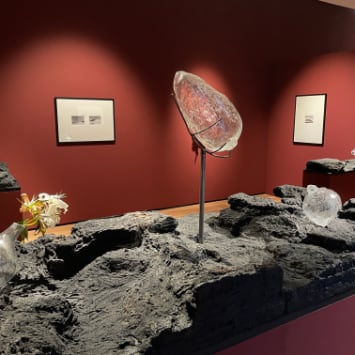
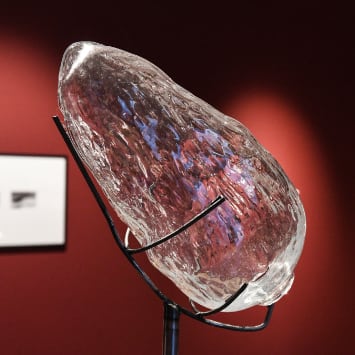
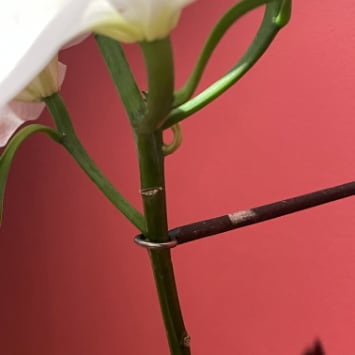
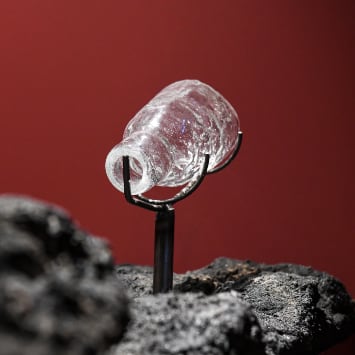
Vertical metal rods with welded thinner rods to support the work. The plant stems are threaded through a welded loop.
1st prototype:
The ring is perhaps too thick (5mm). Need to compare with a thinner one for aesthetic purposes.
The ring is perhaps too thick (5mm). Need to compare with a thinner one for aesthetic purposes.
12
13
2nd prototype with a thinner ring to support the resin cast coal. This is aesthetically more pleasing than the 1st prototype.
Several stands together – despite being many, due to their height and thinness, they still look vulnerable.
‘It Is Easy To Break One Stick’ stamped into the metal. The process of stamping lifted some of the rust off the metal making the text stand out more.
14
A single lump of coal is virtually impossible to set alight even when doused in lighter fuel. It requires persistent high temperatures to keep it burning.
To generate high temperatures I lit a brazier with timber and inserted the coal into its centre. The coal was then removed periodically in order to photograph it.
Rusted sheet metal + burning coal + camera and tripod set-up in order to document the burning process and the coals transformation to ash.
I experimented with rubbing the charred text at the end. It became more legible however it's too obviously been altered/enhanced. I prefer the natural burnt state before cleaning.
15
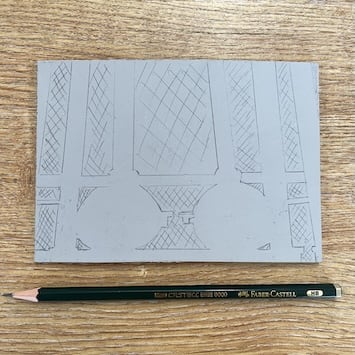
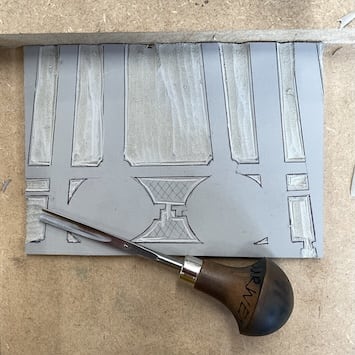
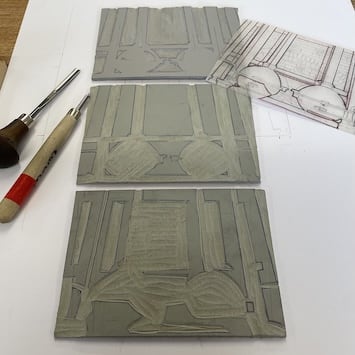
Using Photoshop the image was reduced to 3 colours. This would help me identify light and dark areas on the print.
16
17
Block 1. Attempting to incorporate some lighter areas around the oven doors by rubbing away some of the ink prior to printing.
18
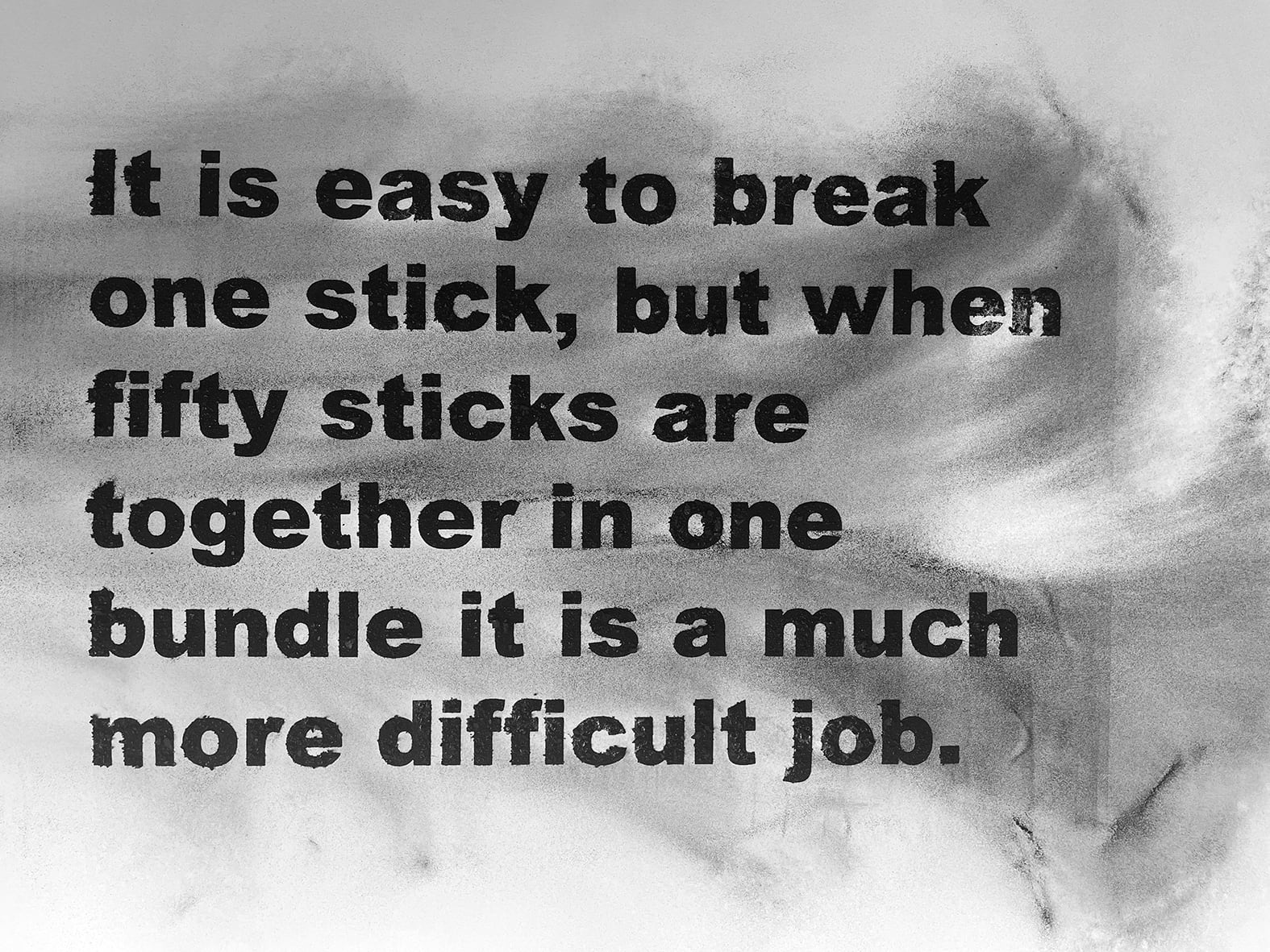
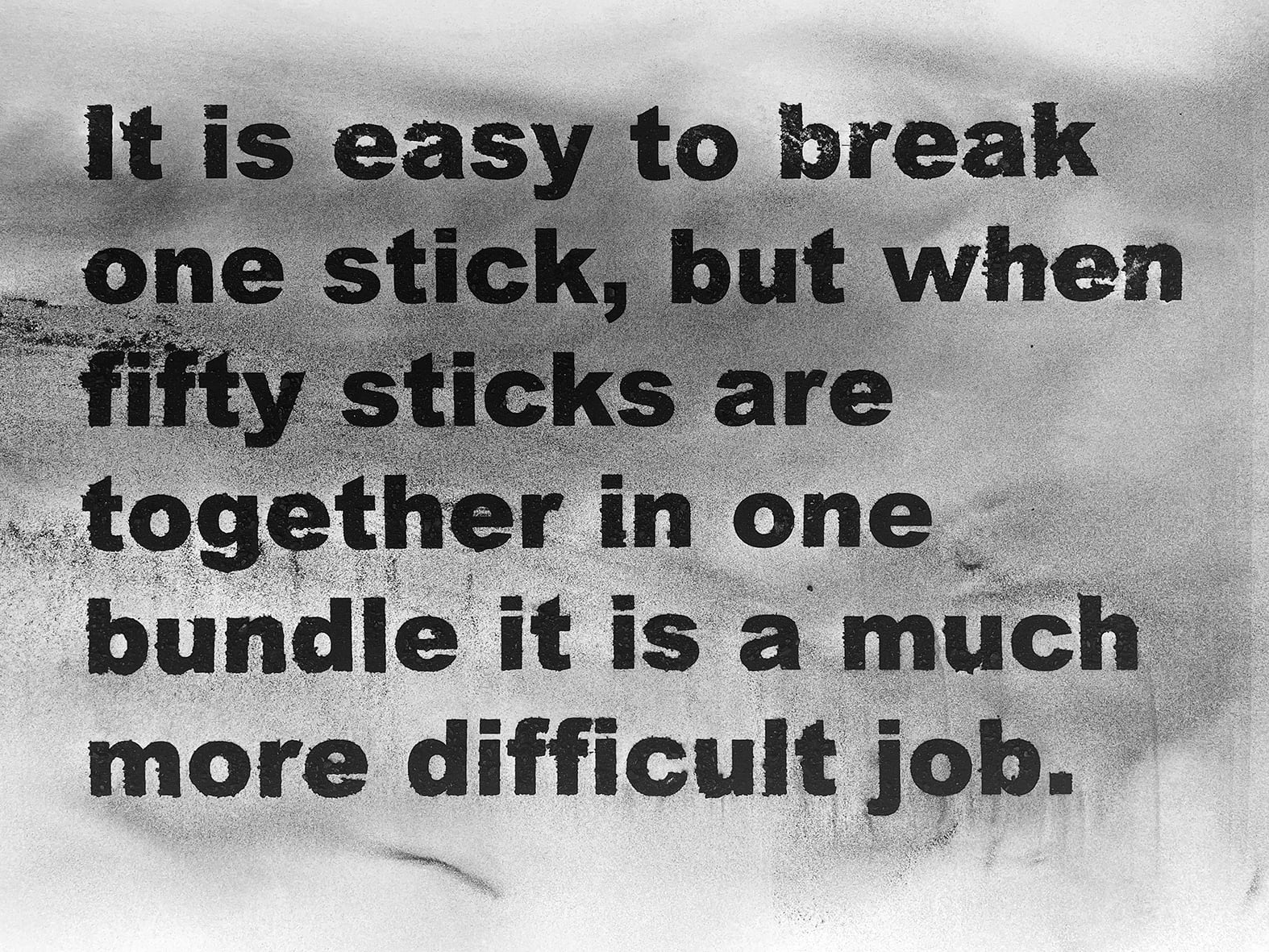
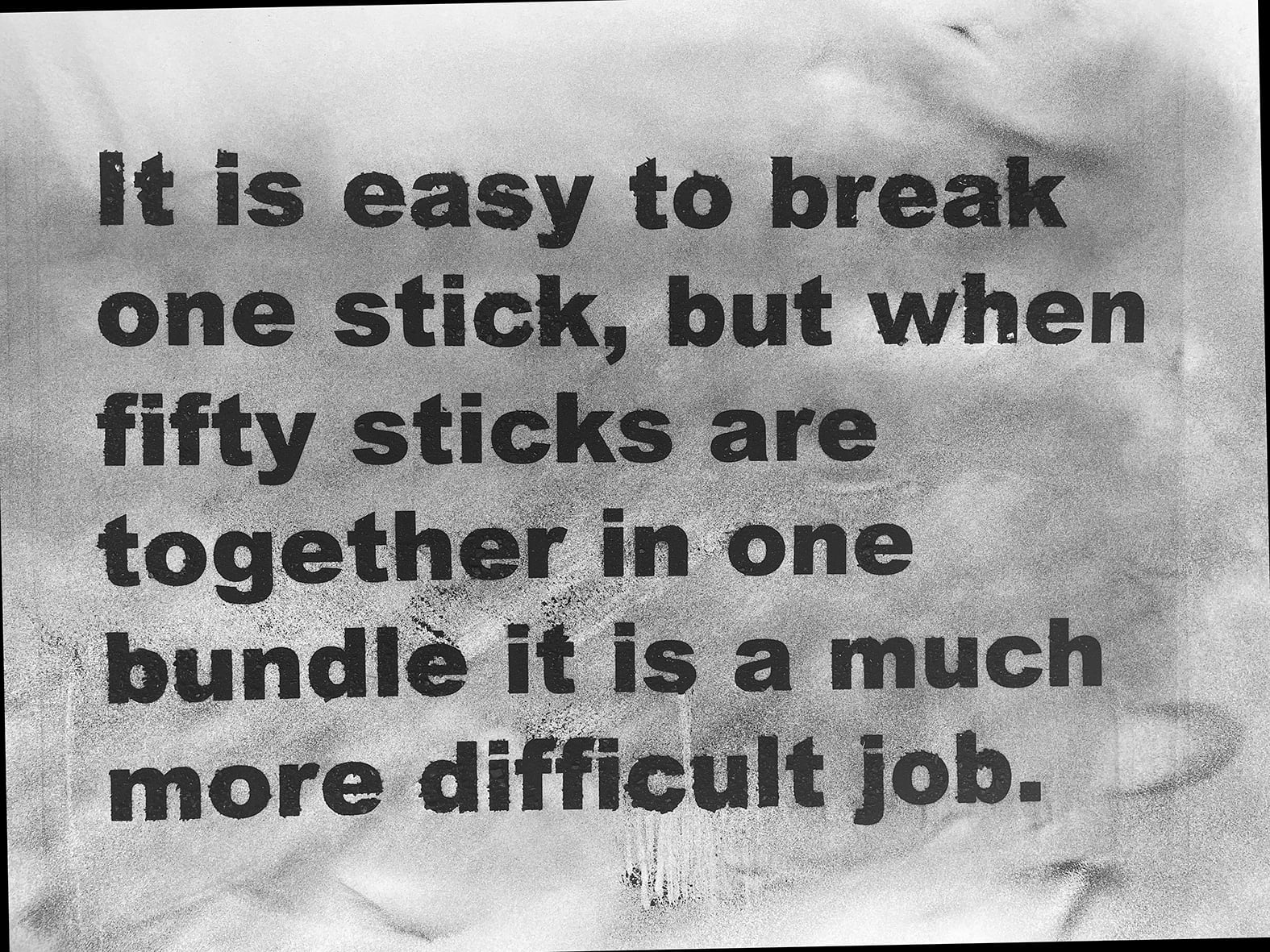
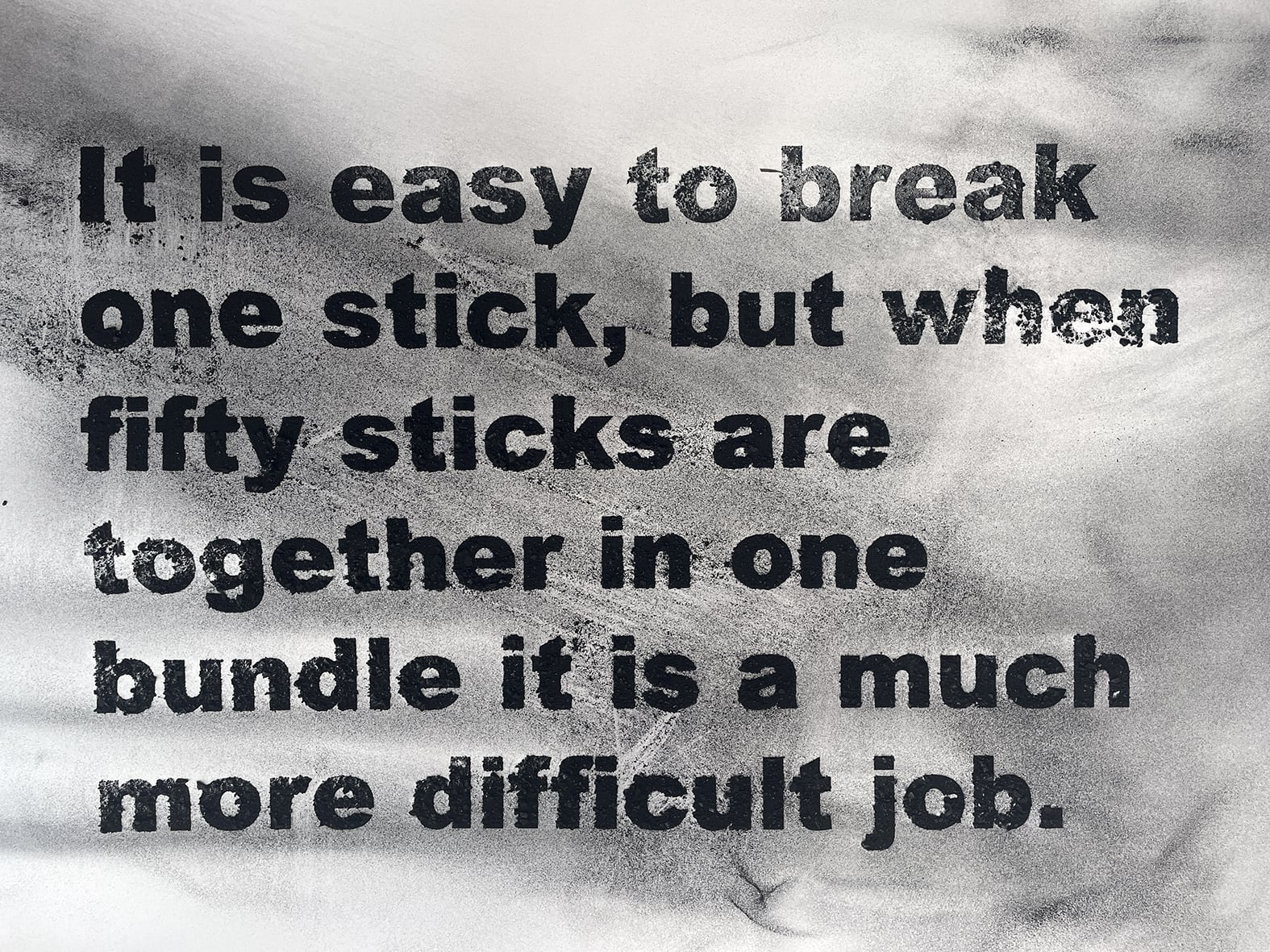
An interesting observation; Depending on the quantity of coal that sticks to the pva glue, different effects are achieved. If a lot of coal sticks, then the result is quite flat.
If coal is a mixture of particles and dust, then quite subtle and interesting 3D shading and effects are achieved. But can the amount of coal dust be controlled easily to create desired effects?
19
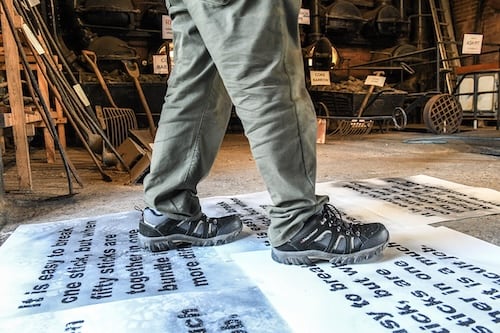
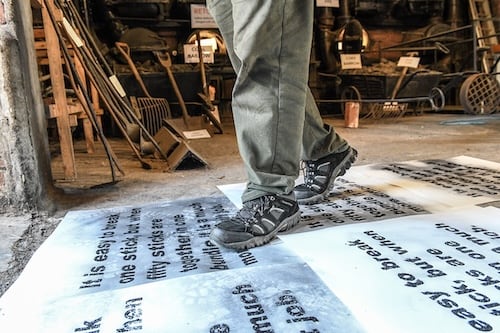
The text was deliberately placed at the entrance of the room so that people had to walk over it to get into the room. Entering into the room and avoiding walking on the text was not possible.
People eventually walked over the text. The intention being that by so doing they are complicit in its destruction.
20
21
Sticks suspended giving the impression of strength, yet the one string suggests also a degree of precariousness.
Preferred choice is to drop a vertical wire from one of the iron cross beams in the gallery. This would need to support approx. 70Kg + extra safety contingency. This proposal was rejected.
Suggestion from technical staff was to run a horizontal high tensile wire across the length of the gallery and suspend the sticks from its centre. This set off alarm bells in my head as the forces involved in a near horizontal wire supporting a 70kg mass would be immense.
22
23
1/ Central wire support hanging vertically. Daylight conditions with little artificial lighting. Note: The JCB would be replaced by the supporting iron cross-bar in the Ruskin Gallery.
2/ Final install during daytime. Too many peripheral background distractions. The focus needs to be just on the sticks and the metal stands.
3/ Night-time install with the only light coming from two spot lights. However this is too bleak / stark for my liking.
4/ The preferred arrangement. It includes some background lighting to soften the effect of the spotlights. However, this may be difficult to reproduce in the Ruskin Gallery.
24
For it to be insured, the wire would need to be built at the factory and be of fixed length – ie it wouldn't be able to be tightened on site.
&bnsp;
A system whereby the wire is wrapped around the gallery railings is clearly not going to be possible for the strength of wire needed.
&bnsp;
A system whereby the wire is wrapped around the gallery railings is clearly not going to be possible for the strength of wire needed.
To be tightened on site, would require a different arrangement which they do not recommend, therefore college would not approve of this.
They would not carry out the necessary calculations to determine the appropriate wire. Who would sign this off in college?
They would not carry out the necessary calculations to determine the appropriate wire. Who would sign this off in college?
Charred sticks attached / resting against walls would certainly be possible in the gallery, however by installation requires the sticks to be bundled to represent strength.
This is closer to what I envisaged. However suspending 50 large sticks is a different ball game to suspending thin wires.
25
Supporting the objects from below has greater potential. It reduces the risk of it falling on someone + can be positioned more readily in different places depending on the site / gallery space.
A support structure inside the sticks, to which they will be attached. Hidden from view as much a possible.
Spotted in the Argentine pavilion at Venice Biennale 2024. Of particular note was how large branches were supported in scaffolding clamps or slotted in thin sheets of plywood.
26
The artist Glenn Ligon deliberately uses text that has been rendered difficult to read to emphasise the obfuscation of black history and the black experience in contemporary society.
“It Is Easy To Break One Stick…” Printed on cardboard to allude to placards used in demonstrations. The use of colour however here does not work in my opinion. The object becomes more of an aesthetic piece rather than a political statement.
Charcoal grey text rendered largely illegible, printed on a light grey background. This is more in keeping with the aim of the work. The illegibility, like Glenn Ligon's work, alludes to the obscuring of working class and union narratives from society.
27
Printing directly onto clean steel plates with obscured text doesn't quite work.
Maybe experiment further by subjecting the printed plate to the elements to rust.
Maybe experiment further by subjecting the printed plate to the elements to rust.
28
29
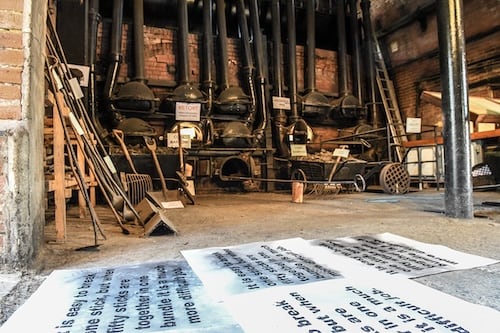
Old gas tower appropriated in Berlin as a museum space. The text on the curved metal façade gave me an idea for possible mono-print images on curved metal plates.
Trialling monoprint screenprint on paper. Monoprint over text.
Fig.1 & 2 show painting directly onto the screen.
Fig.1 & 2 show painting directly onto the screen.
End result on paper. The layering of images and text is effective and alludes to the layering of history.
30
Painting the image directly on the screen. The process must be done in 20 mins to prevent the ink drying on the screen.
31
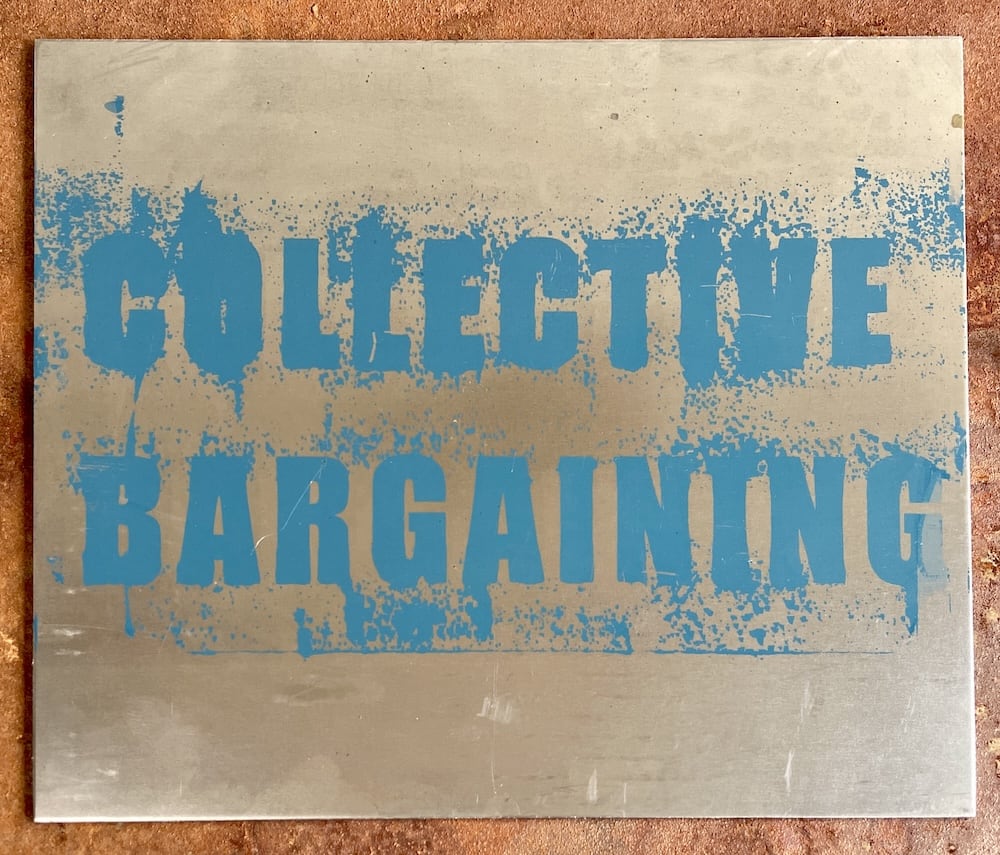
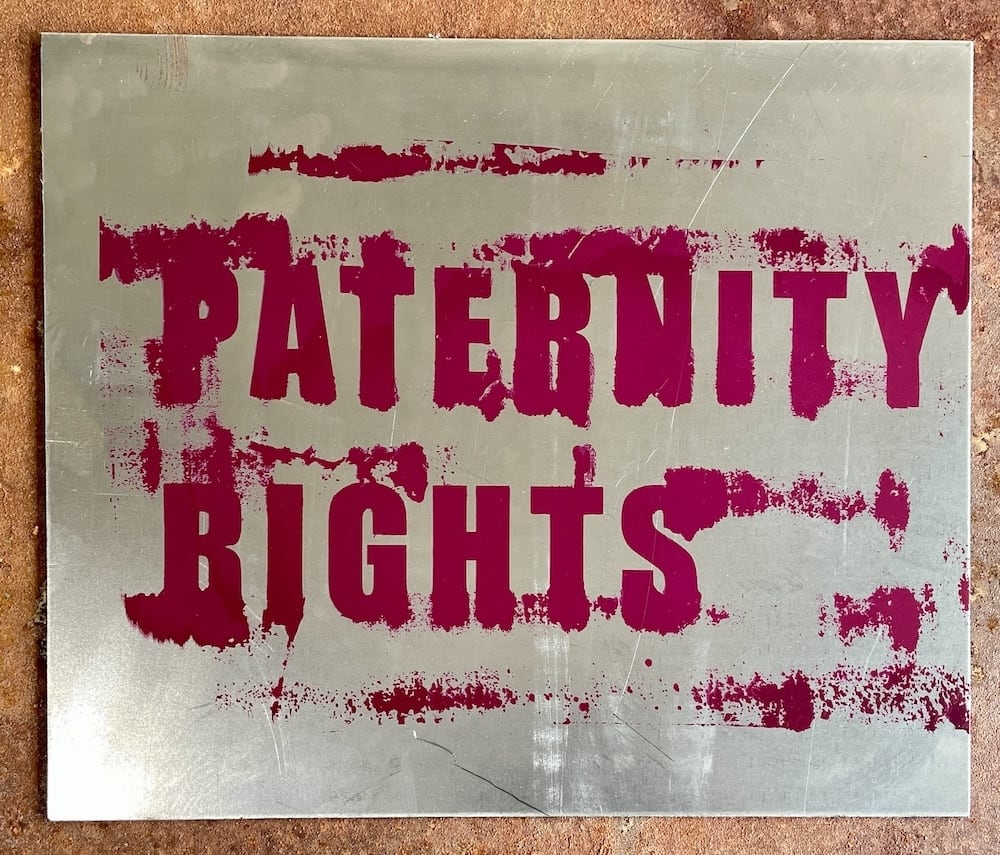
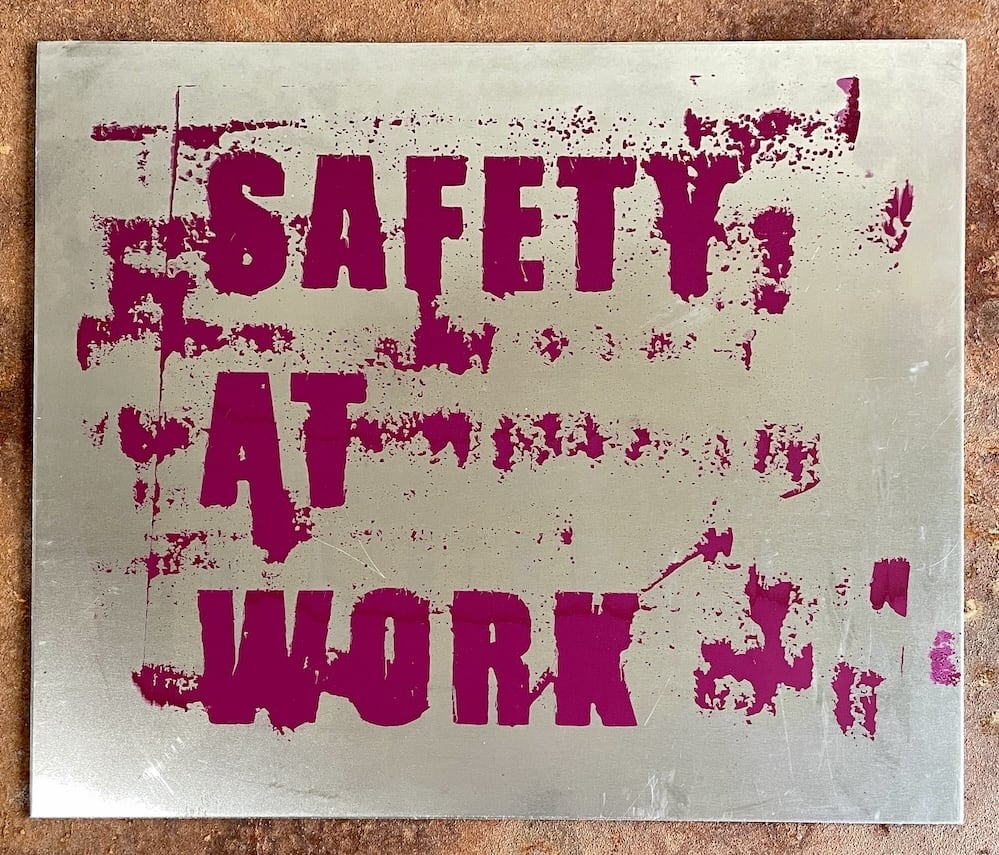
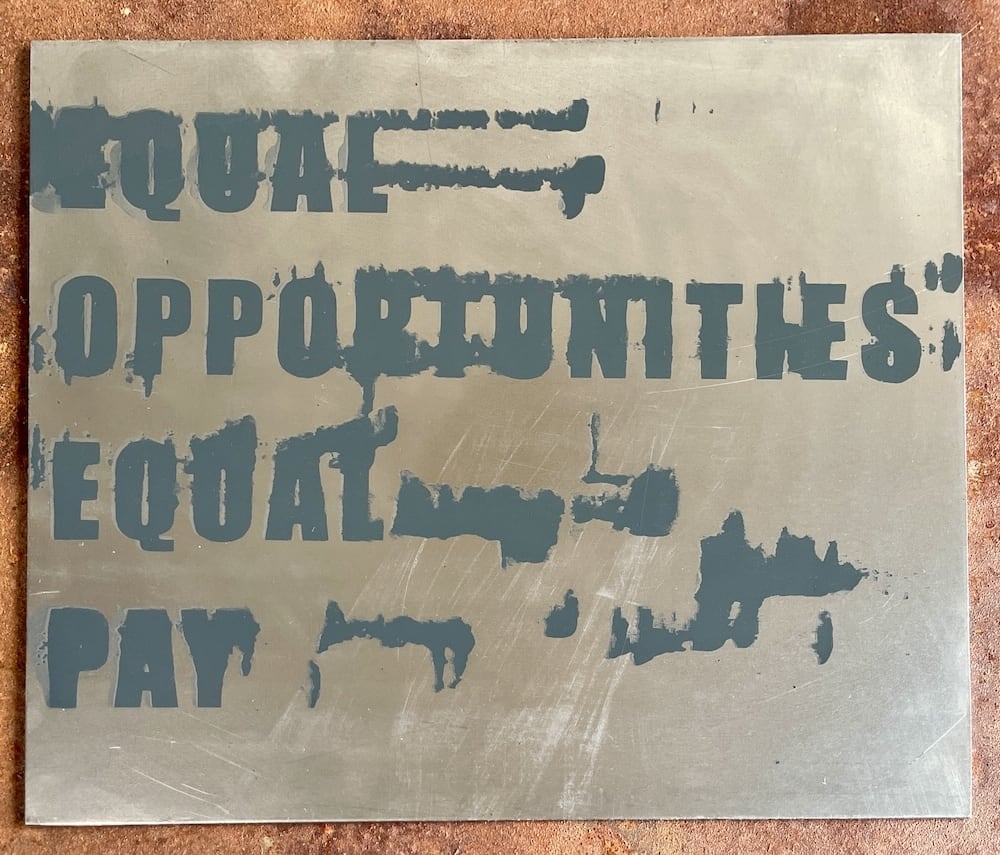
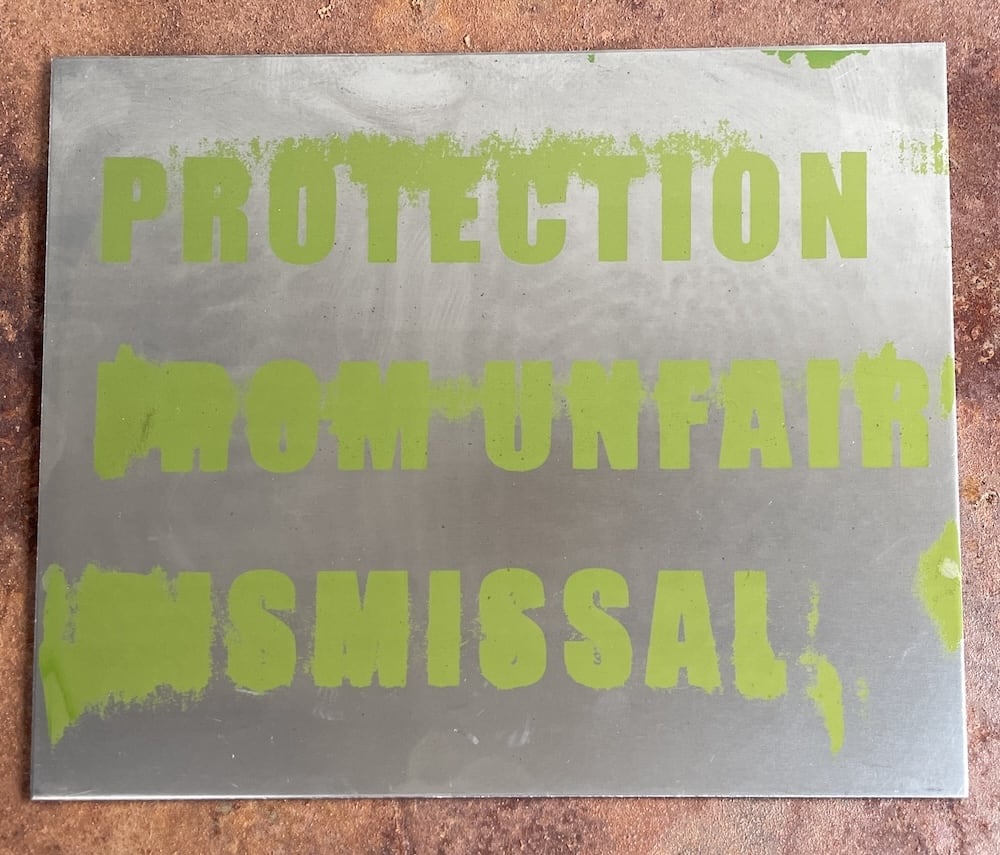
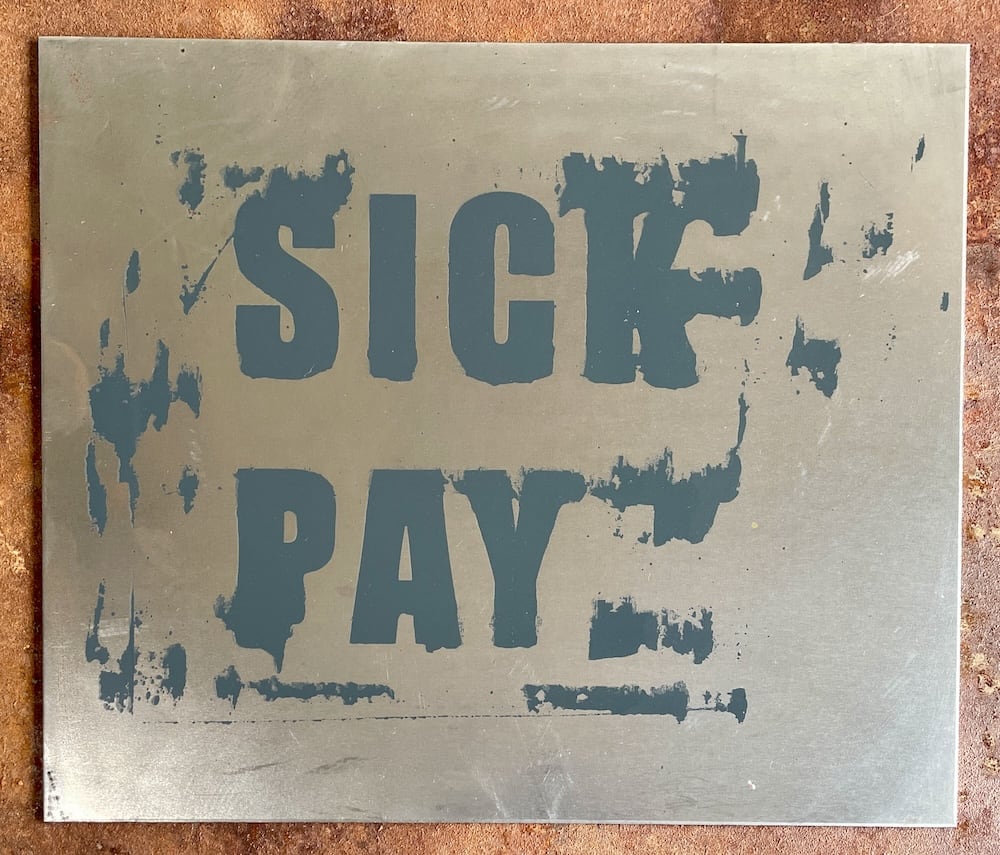
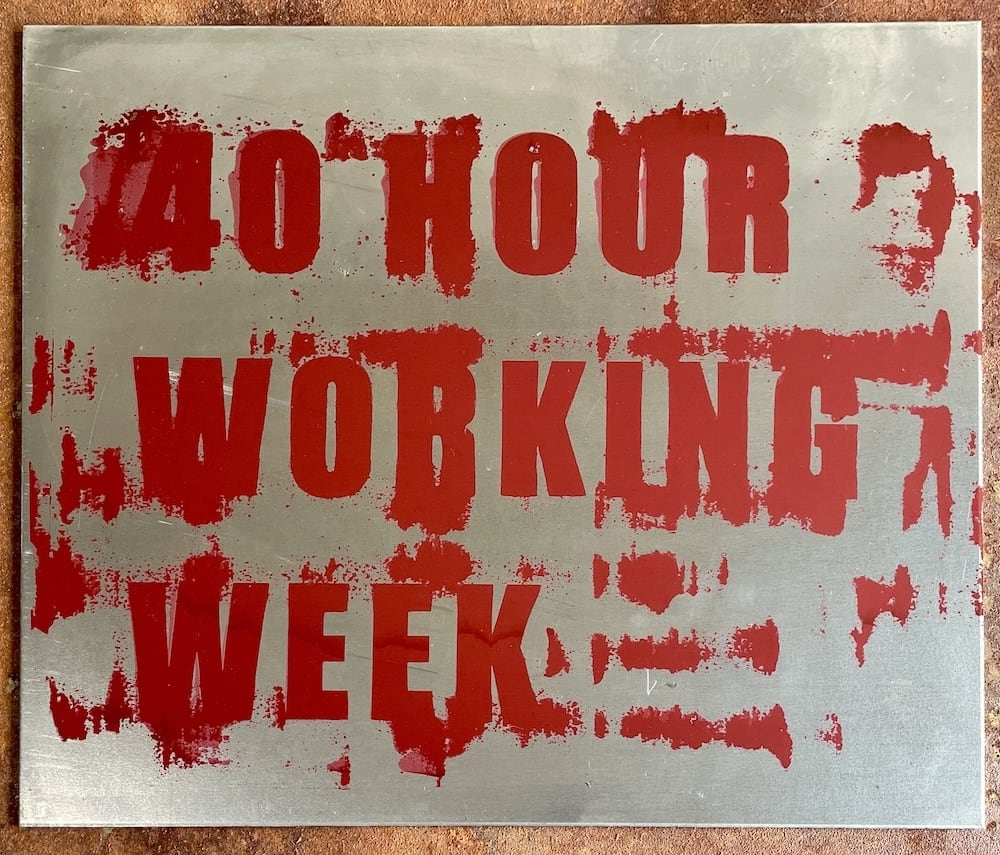
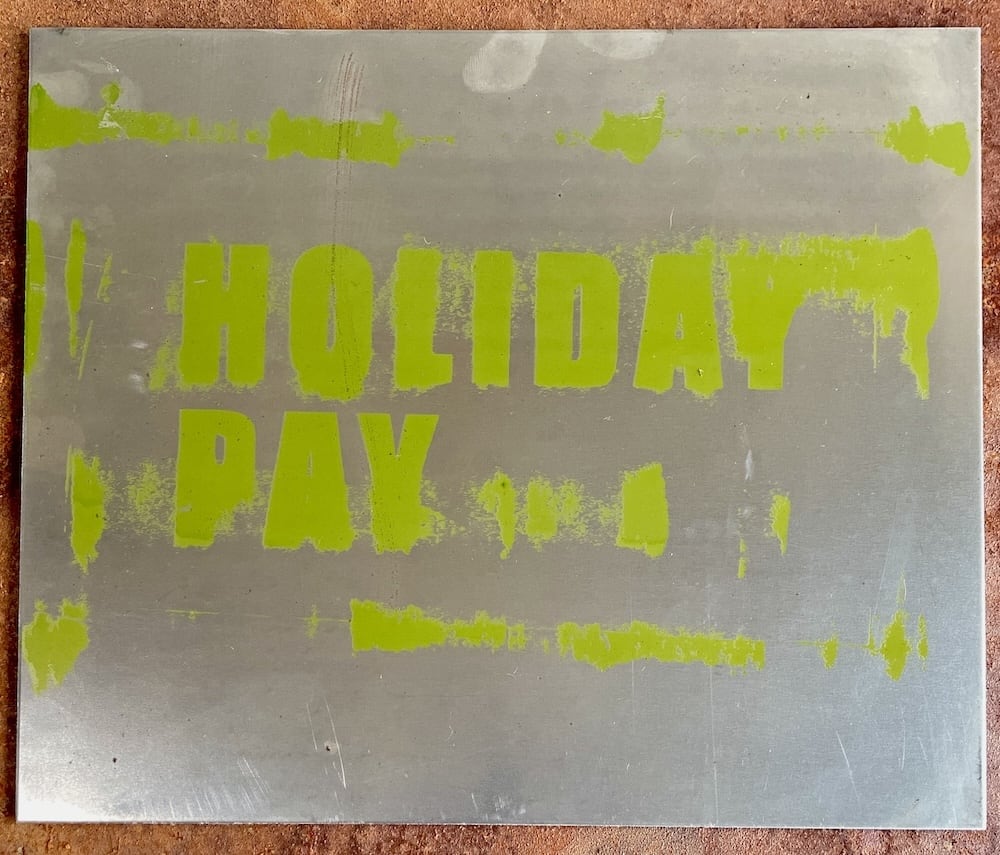
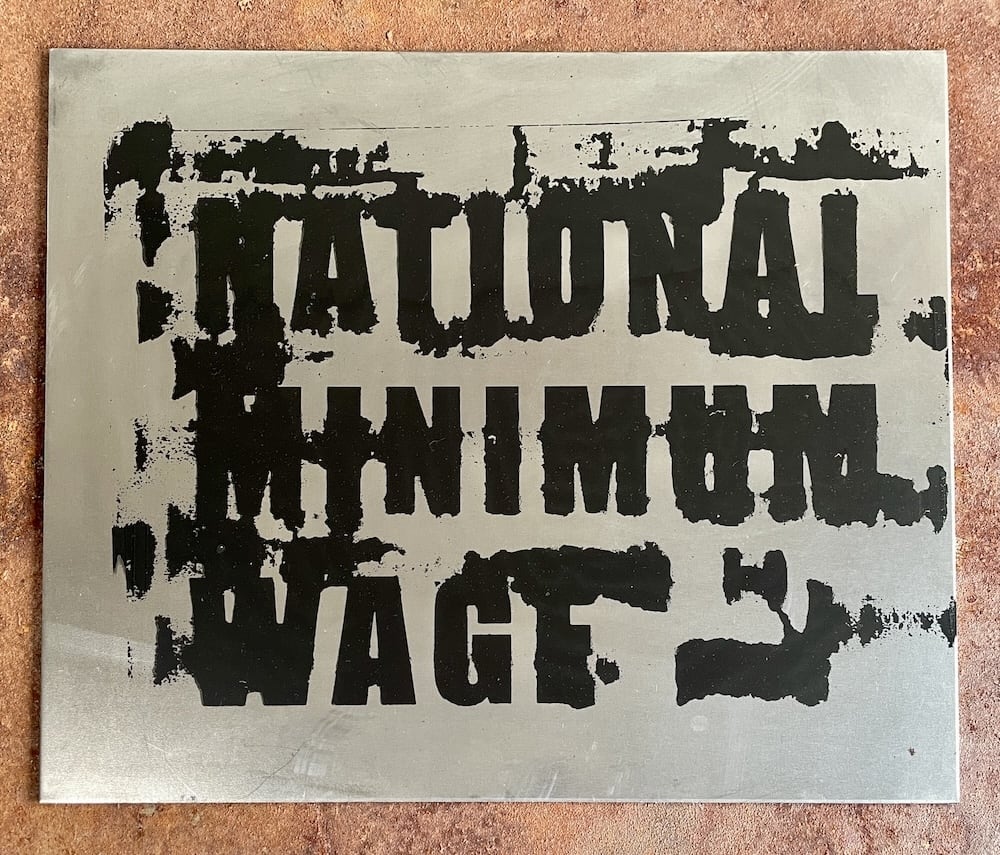
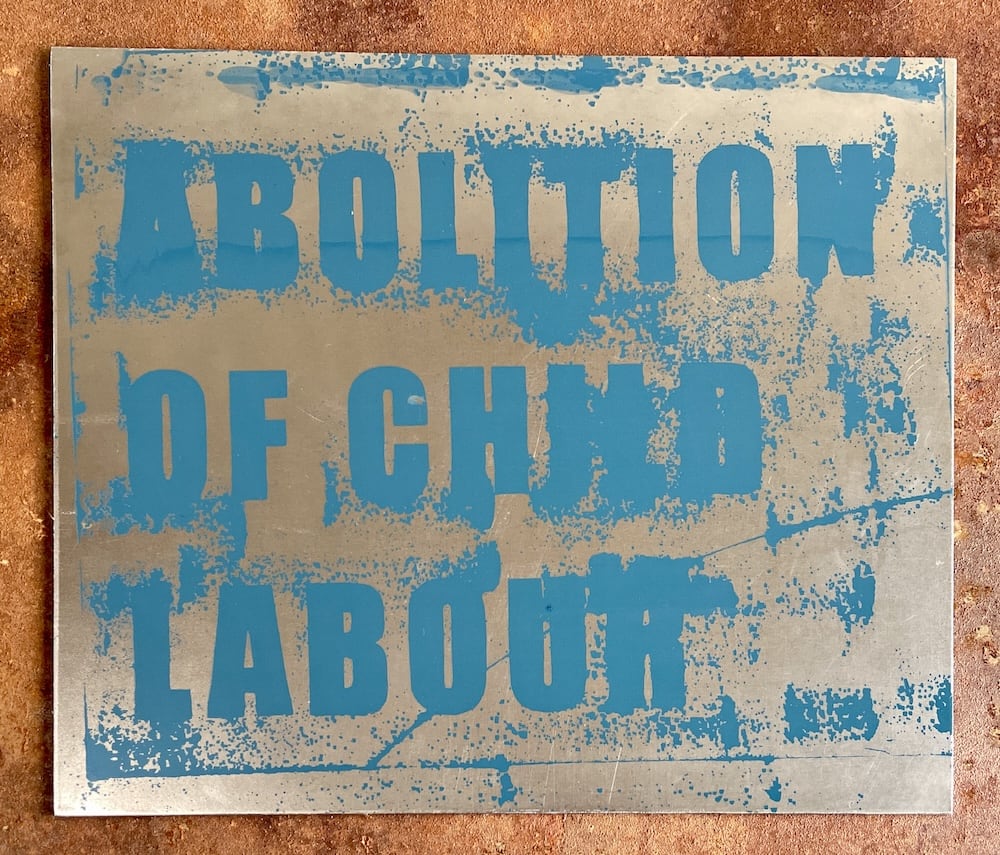
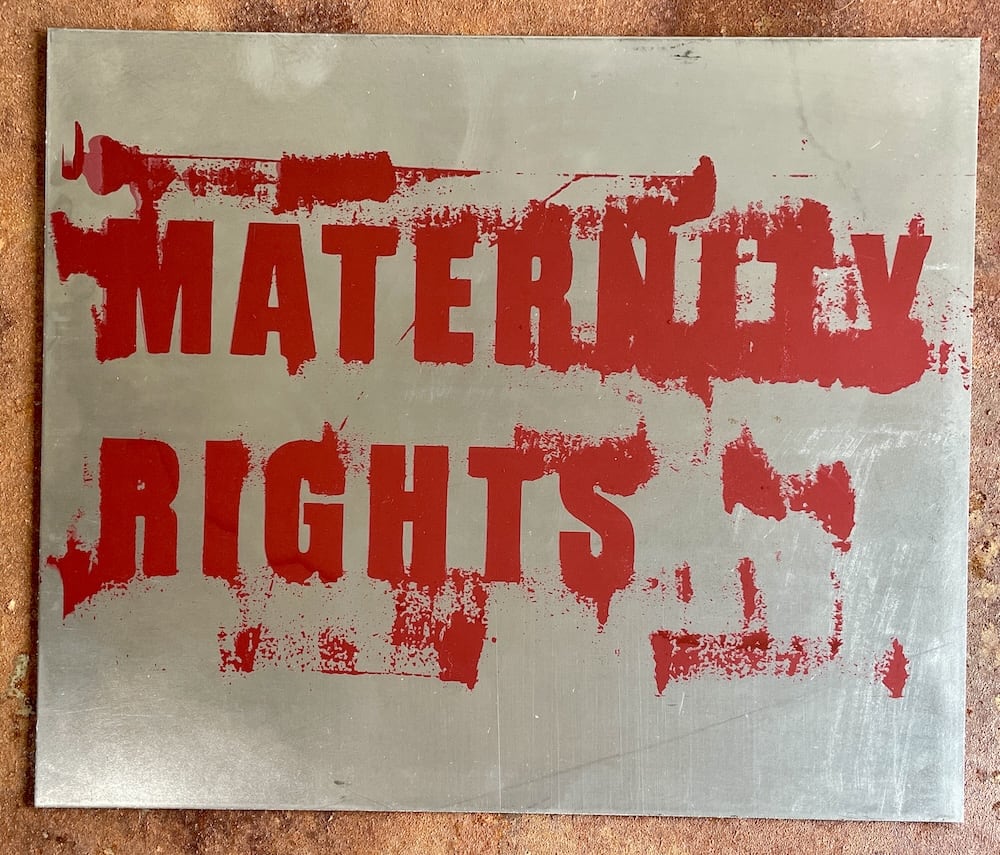
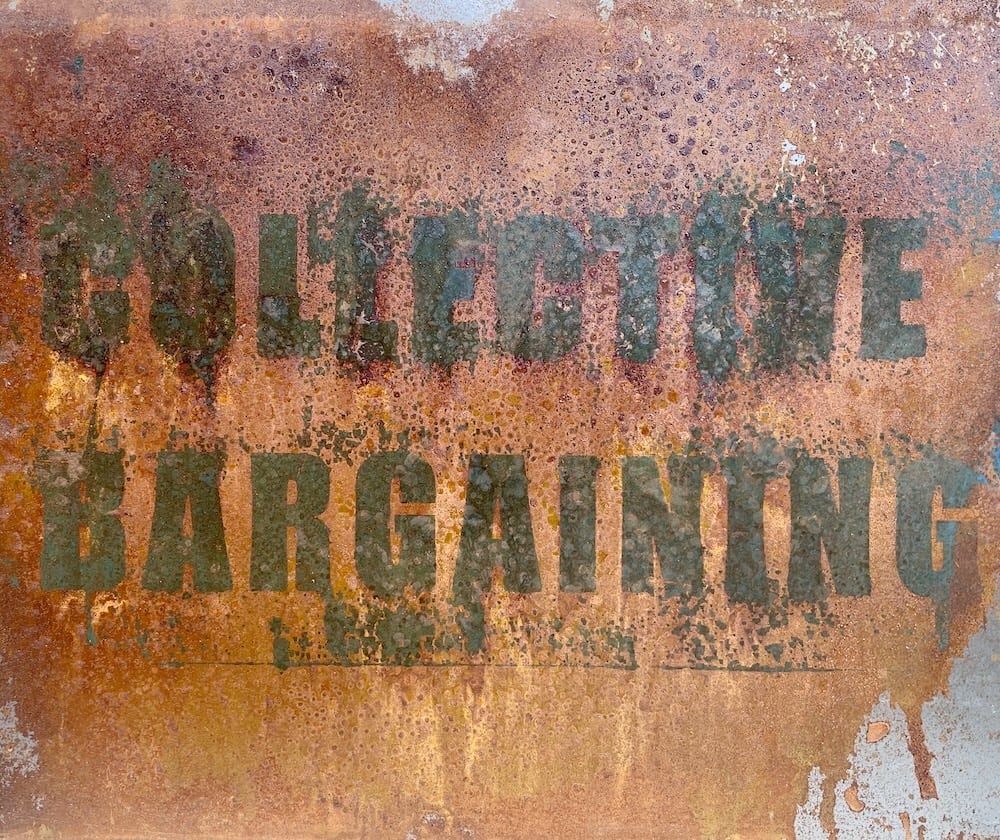
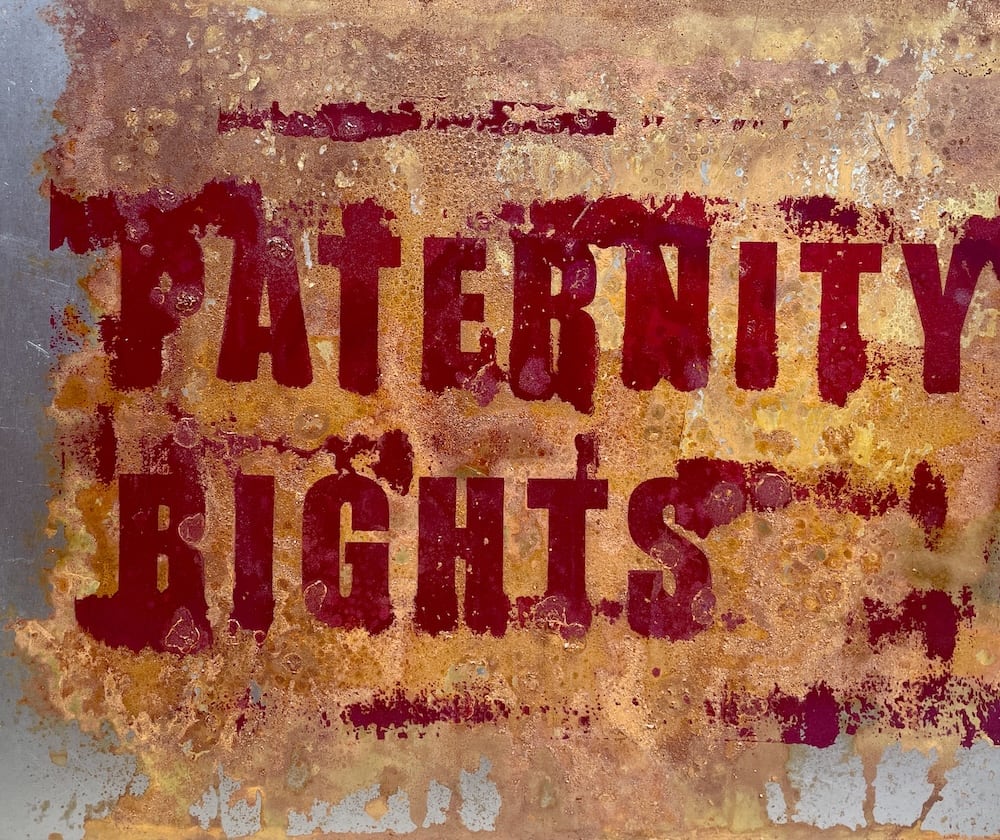
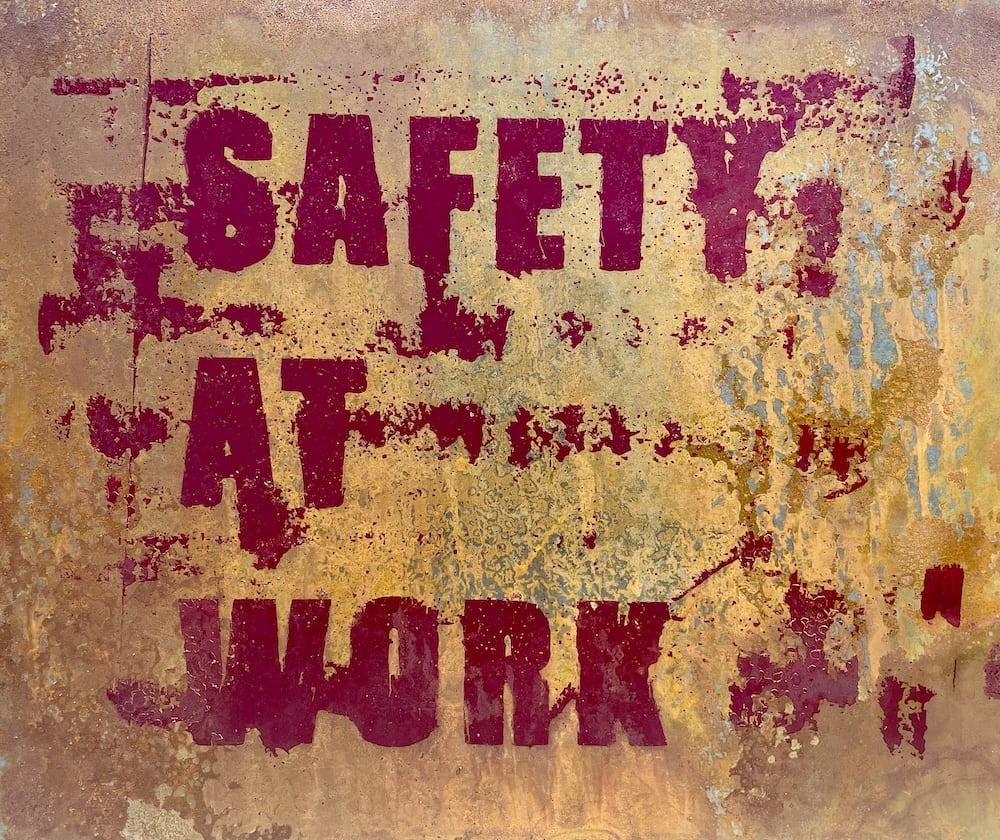
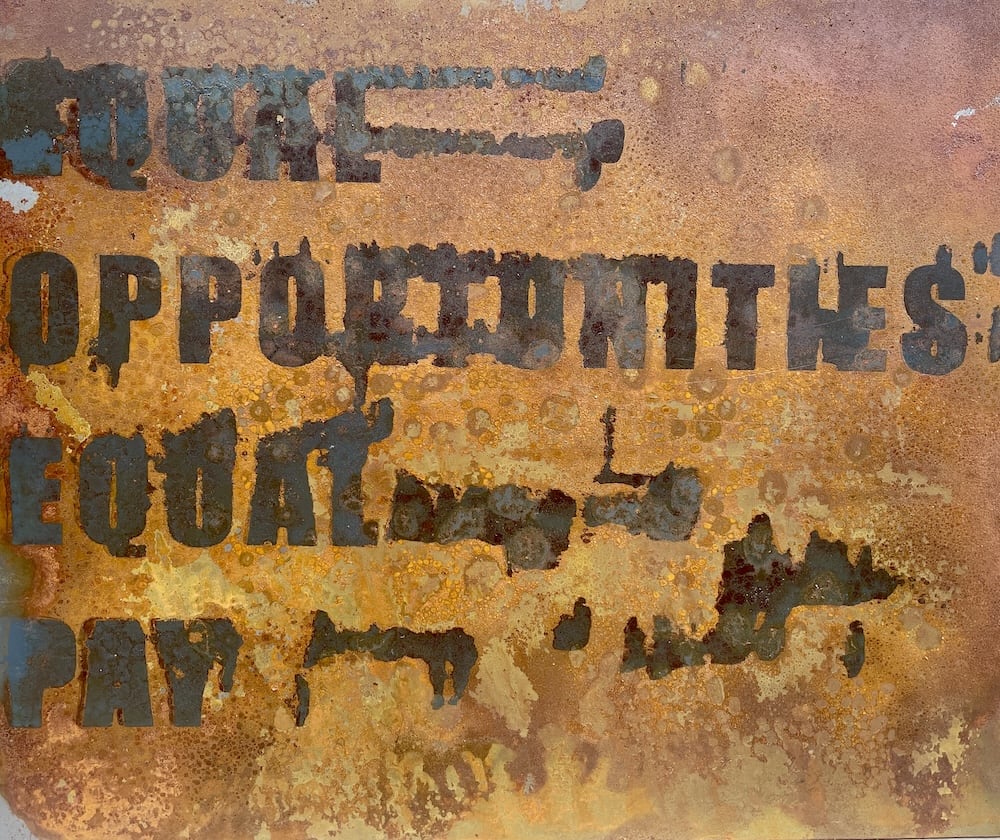
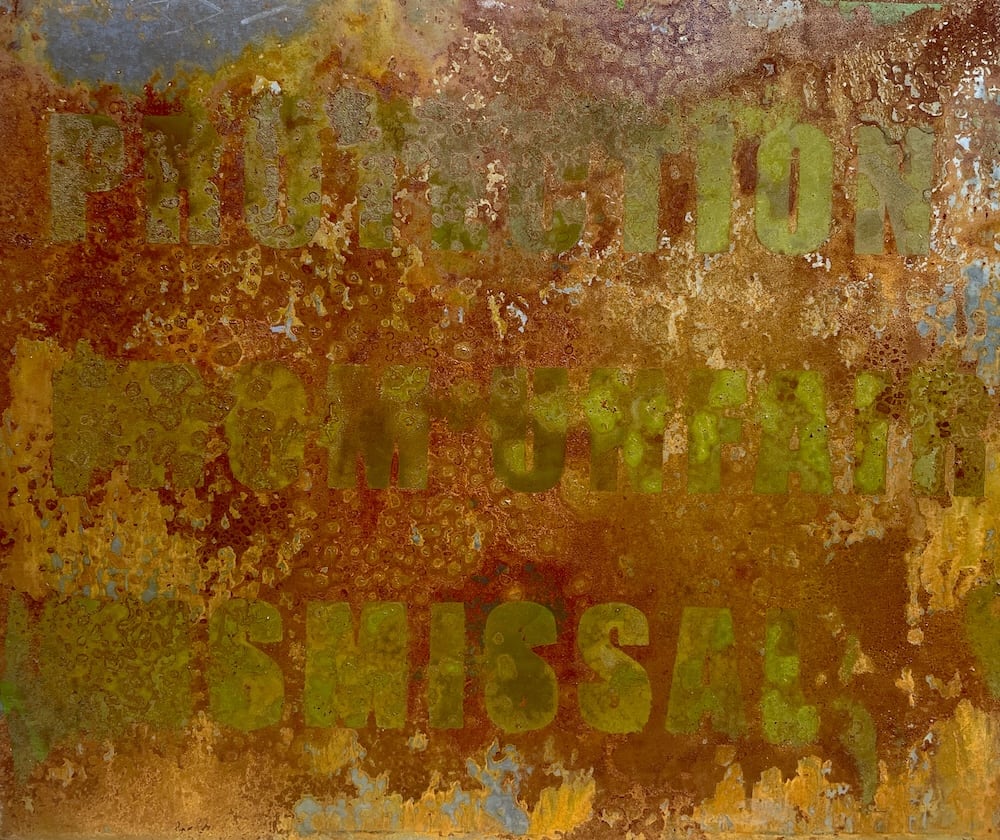
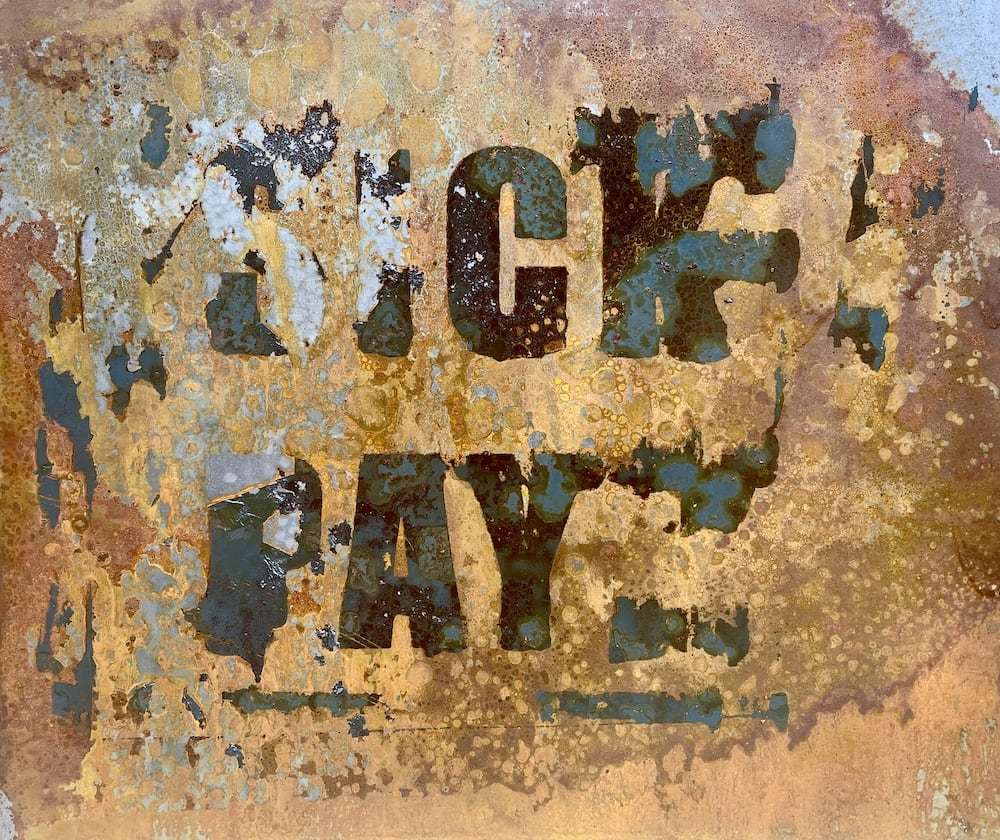
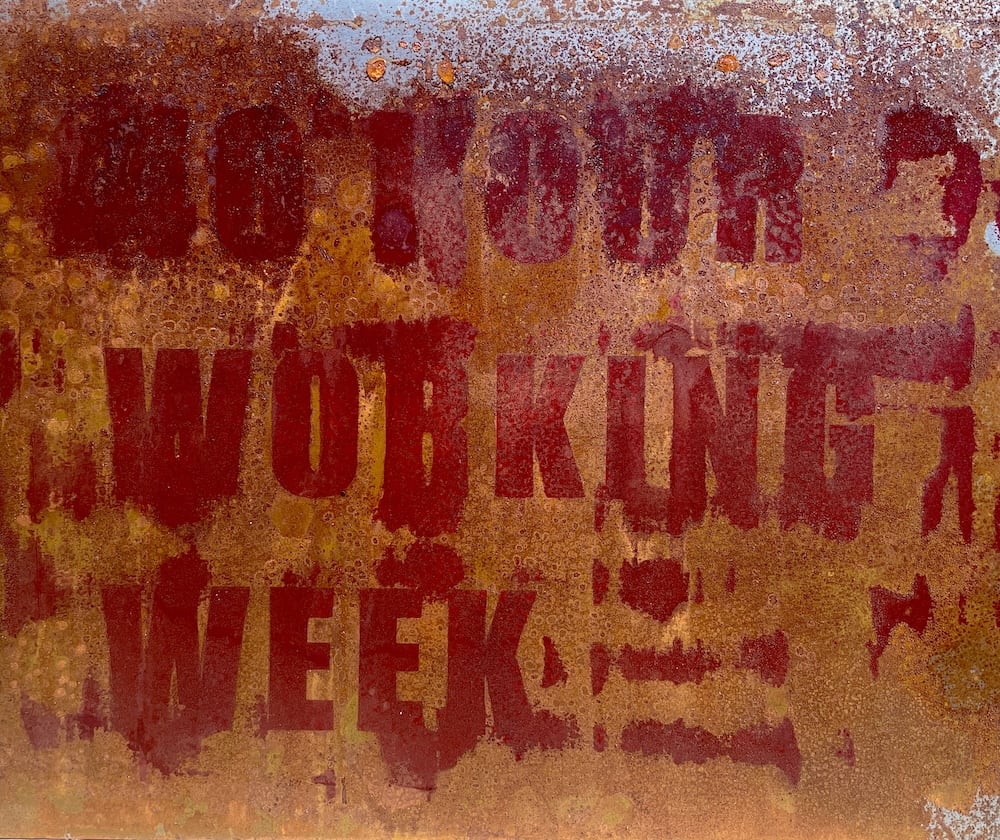
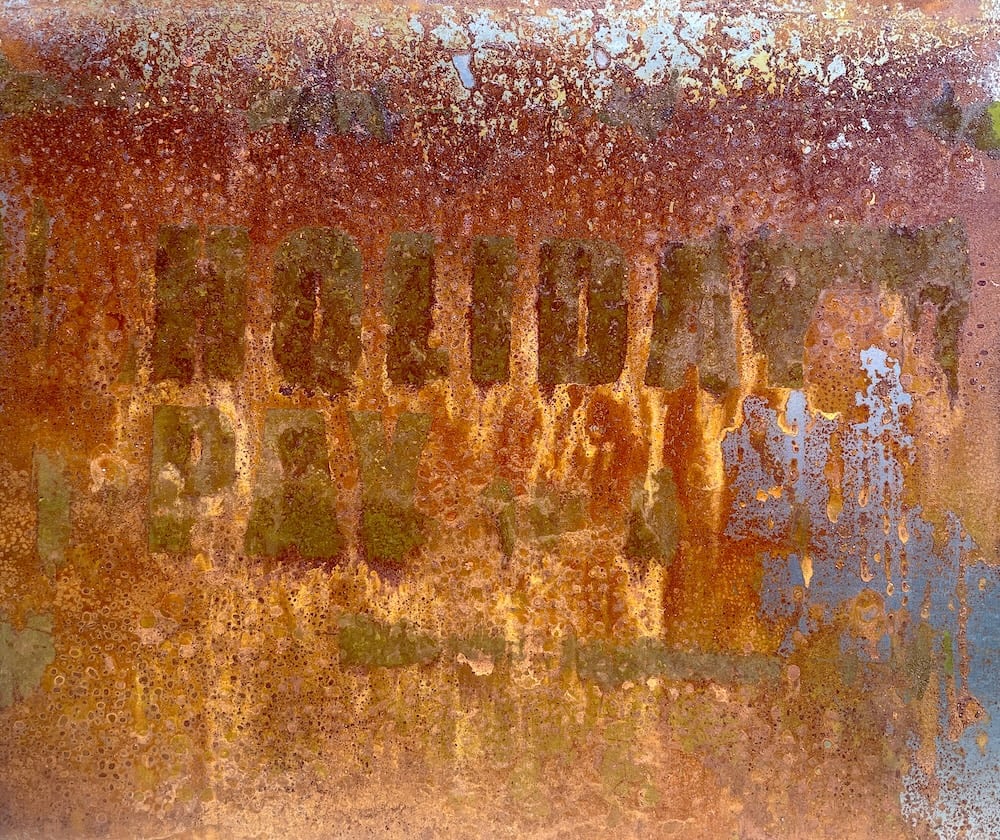
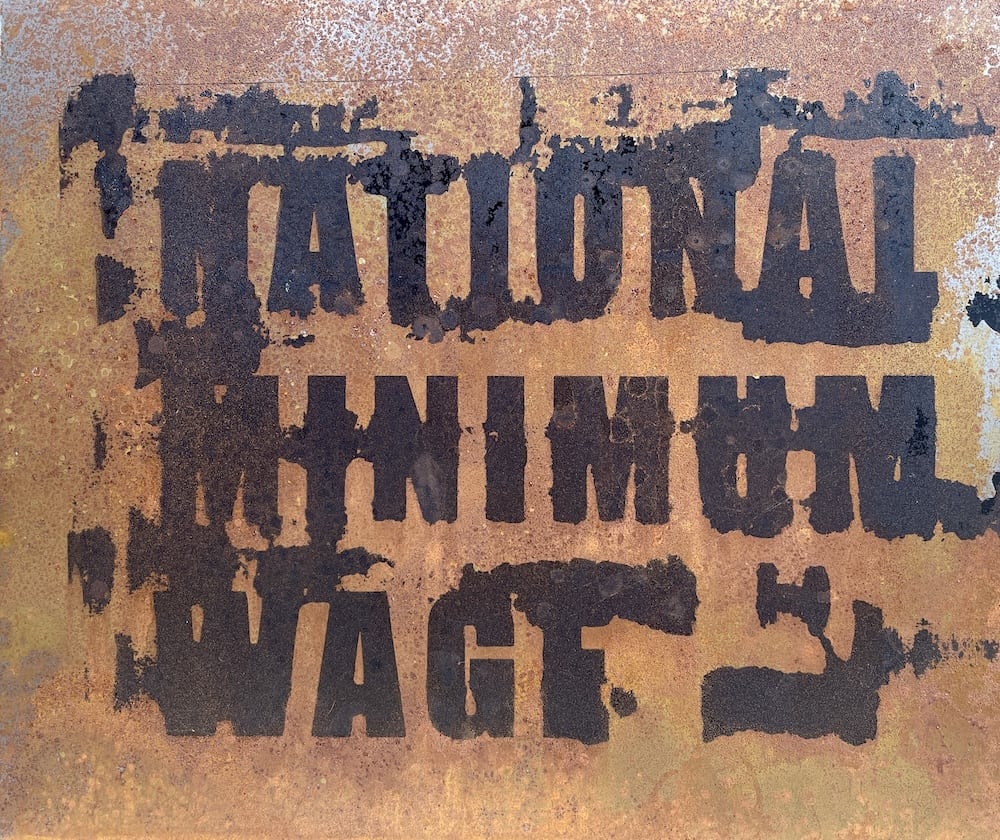
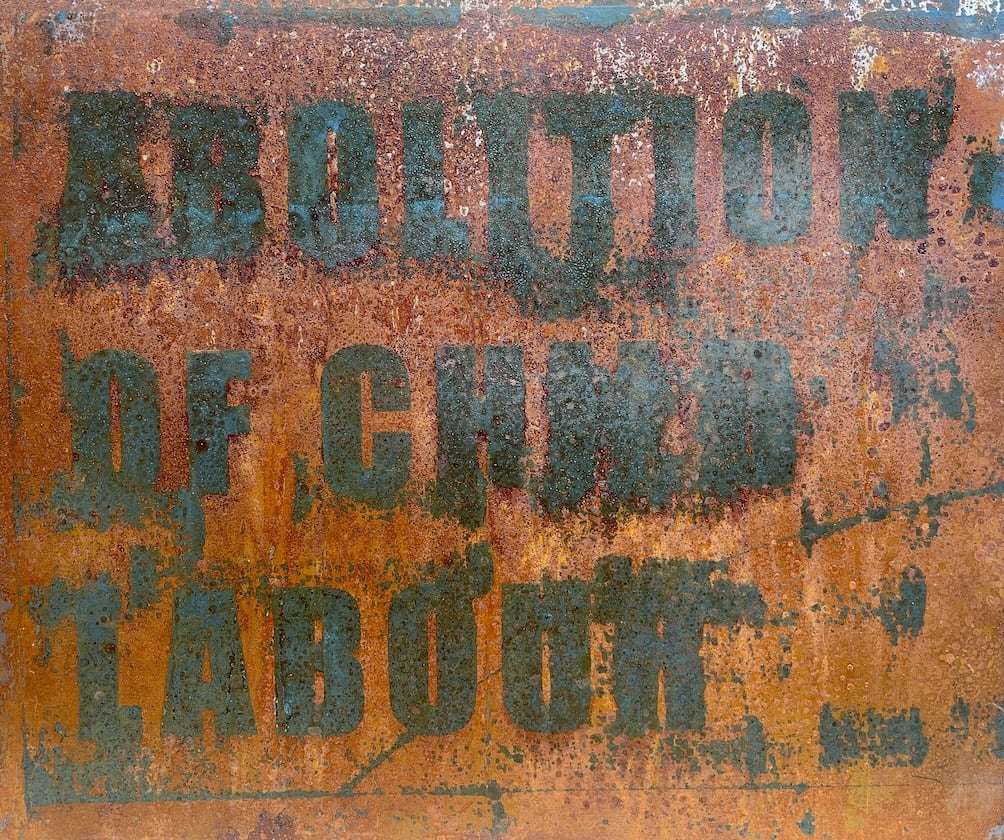
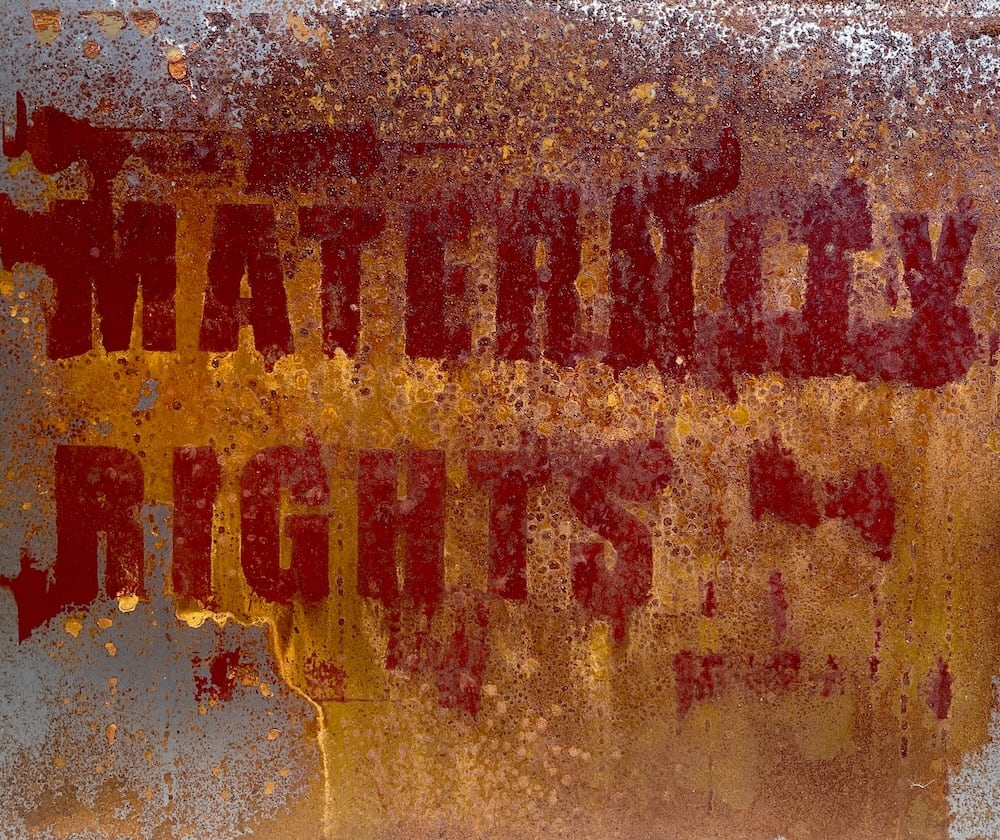
Complete set of rusted plates. Some issues encountered are that some colours do not provide a good contrast against the rust. Also, how to slow the rusting process so that all the text is not lost over time?
32
A sketch of the steel core structure to support the sticks. Structure to be built by RBS engineering in Fakenham, Norfolk.
Hooks to be added to the top of the structure in case the installation can be hung from a ceiling at a future date.
Approximately 15 sticks fit through the centre of the core (shown). The rest will be attached around the outside.
33
Maquette (front and back) of the steel lightbox. LED strip lights to be attached to the back of the lightbox.
Steel lightbox, rusted. The photographic image printed on duratran film. The text 'It Is Easy To Break One Stick' is visible.
34
Phototex repositionable print for walls. This can be peeled off the wall and repositioned many times.
35
Two images were considered for the backdrop to the installation. Either the whole gas tower, or a close-up. The close-up was chosen as it had a more dramatic effect.
To reduce the 'White Cube' Aesthetic of the exhibition space, I considered covering the floor in a stone/aggregate mix. However the logistics of transporting this in to the college gallery proved too difficult.
36
37
38
39
Bending the screenprinted and rusted steel plates through steel rollers. This makes the plates free standing but also resembles the curved panels of the gas towers.
40
41
Colour scheme slate grey and white. Slate grey entrance wall for the lightbox. This will make it stand out and attract visitors into the space.
The space for the stick installation. The difference between the dark on the left and light on the right is to provide light and shade on the sticks.
42
More control of the lighting introduced. i.e. boarding up part of the back window and using spotlights. This is more dramatic and the spotlights have introduced shadows which are aesthetically pleasing.
One consideration was to arrange the plates along the floor to resemble tombstones. But they may be obscured by the steel rods placed in front.
I decided to arrange some of the plates on this wall and some on the wall in the second space to provide continuity.
43
Spotlight used to illuminate part of the backdrop and one of the curved plates.
Plinth also used to raise some of the curved plates.
Plinth also used to raise some of the curved plates.
Phototex photographic image to create the backdrop to the 2nd space. This space is more site responsive to the gasworks in Fakenham, whereas the 1st space serves as a wider comment on the labour movement.
Despite three of the smaller plates hanging on the wall, the crit highlighted perhaps more need for a link between the two spaces. Maybe some loose bits of resin coal?
44
45
46
47
To view a more complete set of photographs of the degree show installation click here.
To view a complete set of images of the work installed at the site of the Gasworks in Fakenham, Norfolk, click here.
48